Sunday, November 16, 2008

Greetings from Grass Valley…

...a place that’s not exactly grassy this time of year after a hot summer...more like straw-colored hills.

So, events since Florence, which was--what, Tuesday? Yah, eons ago.

I’ve clocked 1,100+ miles in a leisurely six days, taken Patchouli on most of it (he had a day off Friday at a hotel while I looped into Sonoma), and had a mini meltdown over Patchouli’s continued and erratic travel angst. He can be fine for half a day, quiet, calm, dozing, then go bonkers for two hours of nerve-shredding meows. I make frequent stops to let him walk around or rest without the engine on while I’m on errands or sightseeing; he’s showing no signs of illness or nausea; and he’s even volunteering to look out the window more.

But all day Saturday he was plotting every way Out Of This Damn Truck that he could find at every opportunity. I was half tempted to leave him on somebody’s doorstep in Colusa just so he wouldn’t have to travel anymore (OK, not an option--I know we’ll get through this).

But what with my worry over his comfort/discomfort, the unsettling rhythm of daily driving and hoteling, the constant change of travel, and my own natural anxiety over moving on with life in a big way, I did what always seems to work when I’m at wit’s end: I pulled into the hotel at Grass Valley, took a short cry, a brief nap, and a long walk through a tree-lined neighborhood, got some chocolate, and felt much better.

Overall, the travel has been getting drier, hotter (80 degrees Friday in Sonoma!), more topographically varied (lakes, hills, valleys, fields). And definitely more touristy-weird in spots.

Squalls-by-the-bucket smacked around the truck most of 101 south from Florence to Crescent City, CA. The spectacular (so I’m told) hills, cliffs, and coastline also insisted on creeping along under the cloak of fog like some foreign beauty hiding behind a burka. The Pacific views I did get were more of those gray waves and grayer horizons, or scraggy black rocks shouldering out of sand like the dorsal spikes of some prehistoric beast taken by the dunes.

I counted more signs saying “You are leaving tsunami area” than “You are arriving at a tsunami area” (go figure), but tsunamis are serious business--as in tourism business: I could have stopped at a Tsunami Gallery, a Tsunami Bar and Grill, a Tsunami Lanes bowling alley...all while racing through tsunami evacuation routes.

I did manage to get onto the Oregon dunes at Winchester (of “the gun that won the west” fame), where Patchouli thought he’d died and gone to heaven in the world’s biggest litter box. (No, he didn’t use it, but he did gawp.) He hated the ocean (“Run away, run away!”), and we spent some time exploring the safer, quieter dune trails, with him leading us willy-nilly over damp sand and blowing grasses. His soft rounded footprints looked tiny and vulnerable next to the otter and raccoon prints that were there.

Crossing into Calif requires an agricultural checkpoint. I was stopped because of the WA plates, and I blithely denied carrying any fruits or vegetables...then drove over the border with forgotten contraband stuffed into the last remaining space at the back of the truck bed...organic Oregon walnuts and honey that I’d bought at The Bee Hive in Reedsport that morning.

Redwoods make an almost immediate appearance after the border, and firs and hemlock all but disappear. One overgrown stump on the side of 101 seemed big enough to park the truck on, and shortly after it, a side road named “Wonder Stump Road” promised more like it.

Driving south of Crescent City was more fog than rain. At times I could see almost nothing of the next turn ahead, and gained a new appreciation for coastal weather conditions. I wouldn’t want to live in all that damp cold. One stop for a Patchouli stretch was at a roaring beach. Big noisy waves throwing themselves on rocks, air that was like walking through the misters in the produce section of a grocery store, the primal beauty and cadence of the sea...Patchouli wanted none of it. He skulked along a rock wall toward the nearest clump of bushes, crying, “Sanctuary!” Even the truck was a welcome respite. (Our third stop at a quieter beach turned out to be much less scary, so maybe there’s hope for the traveling cat, after all.)

I decided to drive the Avenue of the Giants on Wed on the way to Willits (“Gateway to the Redwoods,” but only if you’re heading north; in my direction it was gateway FROM them). This Humboldt State Park really is one of those “must not miss” spots of California. Hwy 101 has been redone here to bypass the 31-mile trek, but they’ve set it up so the Avenue criss-crosses the highway in several places (think of the snake on the staff of the Medical Association logo), so you can get off and on at various points. I drove the entire 31 shadowed and sun-dappled miles, and was glad I did.

Now this place, Patchouli liked to explore. It might have been the soft forest floor so thick that it was almost springy. It might have been the deep, ponderous silence that only an old-growth forest can hold. It might have been the natural warmth and humidity that envelops all comers and drips water from the boughs as from the ceiling of a sauna. Or it might have just been all these amazing trees waiting to be used for their highest calling—scratching posts! (No, he didn’t, but he did gawp.) We spent some time exploring a “chimney” redwood that was really two redwoods that shared the same burnt-out base and core, creating a cavity big enough to camp in.

American marketing ingenuity is alive and well in the redwoods area, and it retains that turn-of-the-century marvel that marked the era of new national parks and expanding interstates. Anything that could be considered a spectacle has been made into a spectacle. There’s the “Famous One-Log House” (I passed two); drive-through trees (including the famed Chandelier Tree, whose pre-SUV tunnel would have taken off parts of The Ruby Falcon, but was cool to walk through); a “Believe It or Not” tree house with a curtained front door entry at its base; the exotic-sounding “Trees of Mystery” complete with a new sky-bucket ride through the treetops; opportunities to stalk Bigfoot (he lives in this region); and something called Confusion Mountain, which also showcases “World’s Tallest Redwood Carving” (the carving-littered entrance was dominated by a totem pole of six huge bears standing in back-to-back pairs, three pairs on each other’s shoulders and--I’m not making this up--wearing pastel painted pinafores and bonnets). Stick a signpost out, put a gift shop near it, charge admission, and the people will come.

And, oh, those redwood chain-saw artists. From wannabes who stockpile RV-sized logs, burls, and ragged root balls next to their junk cars, to folks who pile them next to their finished carvings and studios, redwood in raw and sculpted form is for sale at nearly every widening in the road. Grotesquely elongated human faces, usually native American or Gandolfian; rearing mustangs, parade-waving grizzly bears, enormous wing-spread eagles...

I was surprised to learn that Willits, in addition to being the Gateway to the Redwoods, is the home of Seabiscuit and where that whole story started at Ridgewood Ranch. I missed the ranch tour but would like to do it another time. Actually, I’d like to go back to Willits altogether to see the town on its own merit. I stayed there two nights, but my relax time was spent in much-needed spa time at the Baechtel Creek Inn where I stayed.

The rest of the time on my open day, Friday, was spent (1) getting diesel in Willits (which took three, count them three, stations before I got a complete fill-up--one station was out of diesel, another shut off all its pumps less than a gallon after I started because of a fuel spill elsewhere, and the third finally finished the job). And (2) driving past vineyard after vineyard in the Napa and Sonoma area for the scenery, a visit to the Robert Louis Stevenson Museum in St. Helena, and dinner with an old Aldus/Adobe colleague, Molly and her husband David, at a yummy local restaurant called Fig Cafe in Glen Ellen.

I recognized about a dozen of the bazillion winery names that I passed at 45mph, and have a greater understanding of what this whole wine-growing place is all about. I also wonder why vintners don’t tout the other environmental variables of their varietals, such as the “subtle floral hint of petroleum” and “the under notes of road grime” that undoubtedly add to the region’s soil, sun, and water. We’re warned away from eating blackberries from shoulder roads in Washington because of car exhaust...surely the endless traffic through the valley leaves its mark. Hmmm...perhaps all that sediment at the bottom of a bottle is really tire-tread particulate instead of grape residue.

Getting to Grass Valley on Sat was a short 1/2 tank (instead of 3/4 tank) drive for the day. Cloudless blue skies, shirt-sleeve temps, and orchards, cattle ranches, oak trees galore through Williams, Sutter, and Yuba City. Sutter county is where a certain seedless grape was first propagated in California by a certain William (not related) Thompson. He imported three grape plants from New York in the early 1870s. The one cutting that survived now has thousands of acres of descendents that are putting raisins and grapes into children’s lunch boxes all over the country.

Grass Valley is THE home of the gold rush for the Sierra Nevadas, and one of the few towns that reinvented itself into a farming community after the boom went bust. It’s said that California grows nearly half of the nation’s produce, and I can believe it after seeing places like this. The town has the state’s oldest hotel in continuous use, The Holbrooke from 1851, which hosted the likes of Presidents Grant and Cleveland and authors Twain and Harte.

Like Seattle, the town suffered severe destruction from a fire in the 1880s, so the buildings are two- and three-story brick, which still conveys a precious sense of solidness. Boutique shops by the row, ice cream parlors, white-tablecloth restaurants next to pizza parlors, library, government buildings and post office are all within the same few blocks of old-town downtown Main Street. These blocks merge right into neighborhoods lined with autumn trees and sprawling hedges, Victorian painted ladies next to bungalows and cottages, and yards full of roses that are still blooming in November. Hwy 20 cuts through it but over it, and is hardly noticeable.

Today is toward Groveland, and the beginning of winding travel at the foothills of Yosemite and Sequoia along Hwy 49. Overall I’m getting that a road trip that’s also a relocation trip is great for getting the flavor of a place, but not the best for actually soaking it in. A return visit to many of these locales is in the future, with plenty of walkabouts added in.

Wednesday, November 12, 2008

Good morning from Florence…

Oregon, that is.

It’s 8:44 am, and the day has risen gray and foggy over the Siuslaw River that flows by my Best Western hotel room. The visit with my Portland friends, Tim and Cheri, was great...a delectable dinner at a white-tablecloth place called Higgins (we always try out a restaurant we’ve never been to), then Tim made a mean omelet with a coconut curry sauce for breakfast. Also saw Barney (my former horse) on the way through Chehalis. Cried a bit to say hello and farewell to him. Animals are always harder for me to say goodbye to than people.

After Portland, I meandered through McMinnville (a hub of Oregon wineries and hazelnut/walnut orchards, and current home of the Spruce Goose—the hangar alone looked like it could house two 787s wing to wing) and I visited the Brigittine Monastery for some monk-made fudge. They’re the world’s only monastery devoted to St. Brigitte the Passionate Prophet, who in the 1300s walked from her home country of Sweden to France to tell the Pope (who had fled Rome for safety in France) that she’d had a vision and that he MUST return to Rome and keep the church there. He apparently thought that was a pretty good idea, coming from God and all, and hoofed it back to Vatican City. So once again, major politics and religion are shaped by the women behind the men....

The rest of the drive to Florence was, well, rotten, especially once I got onto 101 from 18. Rain rain rain and more rain plus fog the whole way down, and I arrived an hour after dark to continued rain during the multi-trip schlep of cat and person goods from truck to upstairs room. By the time I went out for dinner, I was looking like that proverbial drowned rat...only a hat saved my vanity.

I was grateful that this part of the coast road wasn’t particularly winding (I had visions of Big Sur), but the stormy weather also wasn’t particularly inviting to take in an ocean walk and viewing. The sea and sky were almost the same dark dove gray, and the breakers high and white wherever I saw them. The glimpses of the coast available before weather and night closed in were rugged and spectacular...reminiscent of Monterey, with windblown, shattered-looking pines clinging to black hulks of rock. I look forward to the rest of the drive down the coast today with better visibility...or at least daylight.

Patchouli is doing pretty good with the truck travel, though he sometimes goes all yowly and fussy for no apparent reason than to grate on my already rain-wracked travel nerves. He still hasn’t used his kitty box while in the truck, but that’s probably mostly from his system...he typically uses it only in the morning and evening, anyway, so I suppose I should be thankful that I don’t have to deal with it overall.

He’s prowling around the hotel room now, looking VERY intently at the balcony through the sliding glass door, no doubt plotting his rappelling route for an escape.

I’m off to Crescent City, CA, today, crossing by car into California for the first time since 1987. Sheesh. ETA for San Diego’s winter stay: Nov 20, with most of my shipped goods arriving a day ahead of me.

Off now to pack the truck and hit the road. More to come as email access, time, and energy allow.

Sunday, May 20, 2007

Monetary Appreciation

I love handling money. Not the way high-rolling financiers handle it, pushing digits and virtual dollars from account to account and hovering over balances on statements and ticker tapes. But really handling money—touching it, crumpling it, jingling it in my pockets.

There’s something so satisfying about tangible cash. Round metal disks that feel solid in my hand, and rectangles of paper that invite fidgets and folds. Cool heavy quarters. Wafer-thin dimes. Chunky nickels outweighing their penny cousins three to one.

And paper money! Crushable, creasable, waddable, stuffable. I iron it through my fingers, twiddle it into a tube, pleat it with origami zeal. Fresh-from-the-mint greenbacks, still crisp and sticky, call for a hard-fisted crinkle or a taut, noisy snap to make sure I use only one at a time.

Small wonder that my first real job during college was at a savings and loan, where I tallied thousands of dollars a day and balanced my cash drawer to the penny at every close.

This peculiar tactile pleasure started in childhood, when money was tight and handling cash become something I saw as a treat. When I was about six, Bank of America started a campaign to help kids start saving. They handed out big, pink cardboard booklets shaped like a piggy bank. I was so excited when my mom got me one. The booklet had a space for my name on the front and slots for inserting dimes inside. It held about two dollars’ worth—a fortune!—and when I finally filled it with my allowance, I got to start my very own bank account.

I was so proud to have a savings passbook. It was the size of a credit card and navy blue, with rounded corners and narrow lines and tidy, handwritten deposits that the teller always initialed and dated. I used to deposit my birthday and Christmas money each year—two, five, ten dollars at a time. Sometimes I’d ask Mom to cosign a withdrawal so I could buy something I wanted, like a charm for my bracelet or a new hair band. By the time I went to college, I had $1,258 in the account, which paid for a lot of the tuition my first year.

Using actual currency, my mom taught me the art of home budgeting in my early teens. She would cash Ken’s monthly paycheck, and together we would kneel at the side of their master bed while she laid out the money on the puffy patchwork quilt and figured each week’s budget for a family of six. We’d talk about finances as she split the money among envelopes—some for groceries, some for bills, some for clothes, some for gas, some for fun, and some for what-all-else ran a household.

She’d write the amount on the outside of the envelope and subtract amounts she took out every week. Sometimes she’d move money from one envelope to another. She called this “robbing Peter to pay Paul” and did it to make up for changes in expenses, or to carry out a special splurge she hadn’t budgeted for. “Shh,” she’d say, “don’t tell Ken.” Somehow there was always enough, but very little left over.

Counting money was a home ritual in other ways, too. Both Ken and Mom had spent their childhood in times when money was scarce—Ken during the Depression, and Mom during World War II. I also remember Moşu and Grandma (Mom’s parents) talking a lot about the meager days of the Depression. So of course all of them had the habit of saving every bit of loose change to convert to bills later.

Mom and Ken stashed their change in a three-foot-tall Galliano liquor bottle that stood in their bedroom. It was just wide enough at the top to accept a fifty-cent piece, and tapered to about six inches wide at the base. It stood in a wire stand to keep it off the floor and had a brushed-metal spigot at the bottom. Moşu and Grandma had taken several months to drink all the liquor from it and then gave us the bottle for collecting coins.

It seemed to take forever for the bottle to fill up. By the time it was half full, I’d be begging my parents to lug it from the bedroom and let us roll the coins into wrappers.

Shaking out the coins made an awful racket, like a thousand keys jangling on a janitor’s ring. It nearly drowned out the TV. We’d always have a butter knife ready to poke into the neck in case of a jam-up, and then the coins would rain out as if from a Las Vegas jackpot.

With some Saturday Night Movie Special going on in the background, the whole family would sit around the pile of spare change on the living room floor and sort and stack and roll coins as we went. I loved the cheery jingle the coins would make whenever someone raked through them to find a fresh vein of dimes or nickels among all the pennies.

Keeping the coin stacks tidy was important for proper counting, and we’d set out columns in even rows to match the amount that each paper coin-tube could hold: five pillars of ten pennies each, four columns of ten nickels, five stacks of ten dimes, ten piles of four quarters. We’d complete the wrapper rows until we didn’t have enough to make a full roll. The extras went back into the bottle for the next counting.

I liked taking the flat paper wrappers and squishing their sides to make them round. They usually stayed eye-shaped until I got the first coins set, though, which was tricky. When I was little, my fingers weren’t long enough to meet in the middle of the tube, so I learned to set four or five coins at once in the center of the tube first. Then I’d carefully tip in more coins a few at a time. Trying to stuff in a lot at once usually bungled it, and I had to un-jam the coins and start over. I still enjoy the ringing, shuffling sound they make when I can get five or so to flow in at once.

When I’d added the right number of coins, I’d hold the filled roll in front of me with one forefinger in each end of the tube, so I could make sure I had equal amounts of paper to fold over at the ends. Sort of like those Chinese torture tubes, only I couldn’t get my fingers stuck.

We had to write the bank account number on the rolls, too, so the bank could adjust our account if we’d miss-counted our nickels. It was easier to write the number on the tube while it was empty, but I didn’t always remember to do that. Most of the account numbers I wrote down wrapped drunkenly around the roll because I couldn’t write well on the curved surface.

Moşu and Grandma also saved loose change, and they would plan their coin-rolling event for times when we kids would visit them. We’d sit at their big maple dinner table and organize coins on a white tablecloth embroidered with blue and pink cross-stitch flowers. I don’t remember what they saved their coin in, but they didn’t usually have as much to roll at once.

They also had a small collection of really old silver coins stored in a black porcelain bank that looked like an old upright wall phone, the kind they used in 1940s gangster movies and on Green Acres. I used to pretend to dial numbers on it in the den. Sometimes when I visited, they’d let me empty the bank and count all the silver and ask them questions about what was there. I especially liked the Mercury dimes. They were thinner and prettier than Roosevelt dimes; they were real silver and felt old and good in my fingers.

Ken was an avid coin collector, too—near to being a hoarder, actually. Many was the night he would open the huge safe in the master bedroom and tote out his collection of cash to the living room for a recount.

Most of the loose stuff was stored in an olive-green, canvas bank bag that was impressively heavy to my eleven-year-old grasp. The rest was a pile of envelopes, books, and money miscellany.

A dozen clear tubes with screw-top lids held ribbed stacks of quarters rigid. Used orange prescription bottles capped with white would rattle with dimes. Several dark-blue, heavy books opened and opened and opened again to reveal a two-foot strip of cardboard punched with perfectly round holes, each printed with a date and a letter like -S and -D, and most of them plugged with dimes or nickels or pennies.

Ken would sit with us on the floor, a modern-day Silas Marner, and let us kids spill the treasure onto the threadbare brown carpet. The silver slid and rang out merrily into a pile. We would sift through the collection—counting, categorizing, fondling the coins—while he documented the count, described the nuances of numismatics, and impressed upon us the extreme value of these specimens.

He taught us how to quickly recognize silver dimes and quarters from their copper-nickel counterparts by checking the edges for one- or two-metal coloring. I learned that D and S on coins told me the place of minting (Denver or San Francisco) and that no letter mark—a “plain” coin—meant Philadelphia was its source. I soaked in our nation’s history as it’s recorded by its currency, from the first national banking of Revolutionary War times, to the issue of gold and silver certificates, to the Federal reserve notes we use today.

Ken had original two-dollar bills from the Depression, and Indian Head pennies, Buffalo nickels, and Mercury-head dimes in varying states of wear. Heavy Liberty dollars and silver fifty-cent pieces. A Depression-era silver certificate or two, with its identifying blue-inked seal on the front of the note. I came to appreciate currency as art—each coin a sculpted bas relief, each note a finely etched engraving. I still smile when I spot the spider that Ken always pointed out on the face of a one-dollar bill. Was this some engraver’s private joke?

Occasionally, my parents would buy special edition sets, like all the coins minted in one of our birth years, or the whole set of coins struck for the Bicentennial. My favorite one was a slip of cardboard in a plastic sleeve that held a Lincoln penny and a Kennedy half dollar. Between the two coins, a paragraph told all the similarities in their lives and deaths—even the trivia that their full names contained the same number of letters. I took that to show-and-tell one time in sixth grade.

As co-keepers of the collection, all of us in the family were trained to scrutinize every bit of currency that crossed our palms—from sidewalk finds to change given at the grocery store. Wheat pennies (pre-1959) were valuable. Nickels, dimes, and quarters from 1964 and earlier were solid silver and therefore valuable. “Three-liner” twenty-dollar bills—which stated the note was redeemable for lawful currency (gold or silver)—were outdated and thus valuable. Coming upon a 1943 steel penny—the only time they weren’t minted in copper because of war shortages—was like finding the Holy Grail.

Usually all I ever got were wheat pennies and silver nickels, but I checked every coin just the same. I’d bring each find to Ken or Mom, and they’d either pay me the face value and add the coin to the stockpile, or they’d have me save it myself.

Two decades later, after Ken died and his collection was divvied between his two kids, we were all surprised at how small it actually had been. My own vast collection, which I’d started at age ten and increased with silver inherited from Moşu and Grandma, could fit in a shoebox and still leave room for one of the shoes.

In time I wanted to cash in these rare and esteemed coins for the high value they would undoubtedly bring after so many years out of circulation. My whole collection fetched little more than $45, including the special edition sets and my prized Lincoln-Kennedy comparison card. Of my assiduously saved silver nickels, the dealer declared, “They’re still worth a nickel. Spend them.”

Only my tubes of a hundred or so wheat pennies had shown any real appreciation over the years: they had doubled in face value to two cents apiece.

Tuesday, August 15, 2006

...And Out

Getting to Gatwick turns out to be flawlessly timed this morning, even though it involves several transfers: out of the hostel at six to the Oxford Circus tube, step onto an arriving train, wait one minute for the Victoria tube, walk onto the waiting Gatwick train, and leave within half a minute.

I disembark forty-five minutes later at Gatwick thinking, That the rest of the trip to Seattle goes so smoothly.

Not quite.

Gatwick is wall-to-wall people. A harried airport worker points me to Zone B—farthest from the train’s entrance, but solely Continental—and I position myself in a single lane of people who are all pressing forward through seven lanes of oncoming travelers. Tempers are ragged, but most people shuffle along the best they can, looking haggard and travel-worn.

A few folks mutter and grumble and try to shove us up from behind as if we are a herd of recalcitrant cattle, but our progress is often blocked by cross-traffic: overpacked luggage trolleys, overflowing strollers, rolling hip-high suitcases, and enormous backpacks trailing their straps on the ground. Getting anywhere takes the stamina of a salmon swimming upstream for its last chance to spawn.

Having paid extra on my mileage card to upgrade to Business Elite class continues to pay off in valuable perks, especially on days when security remains high and the rest of humanity here is milling around in near-mob conditions. Zone B is in a basement of sorts, with Business Elite in their own check-in area. In the half hour wait, a man checks my papers while I’m in line, the lady takes my bag, checks me in, and sends me round the back end of the entry to the departure gates, which gets me to a security station in less than ten minutes.

They hand-search my daypack carry-on (which has very little in it), and are just about to take away my pens when, mid-search, the ban on pens is lifted—right after the security gal had to abscond with innumerable colored pens and pencils from a little girl’s pack ahead of me. I get to keep my pens, but she removes my aspirin, jetlag pills, apple, Snickers bar, and fruit granola bar before letting me through. Just about all that’s left is Perry, my writing tools, and my tickets/ID.

Sheesh. Talk about an unbalanced reaction to a threat. As of this morning, they’re now allowing cell phones, electronics, and laptop computers, all of which have detonation-capable battery systems, but they take away my Snickers bar. I feel so much safer.

Business Elite also means I have access to a Continental lounge, where I can while away the couple of hours until my flight. (Just for the record, the first class BritRail pass wasn’t worth the extra cost, even at summer travel, although the roomier carriages were more comfortable than in standard, and I sometimes had electrical power for Perry. About half of the trains I took didn’t offer first class. I was also more likely to talk to folks in standard than first, and I experienced more of the local people there.)

For the very bored (me right now) or the very desperate (god forbid I reach that point), Gatwick airport offers two floors of food and shopping and a smoking cell in the middle of the upper floor. The cell is about twenty by thirty feet, walled, unceilinged, with glass that curves inward over the smokers from shoulder height to six or seven feet up. An entrance is on each side of the cell. The space is packed—standing room only. Puff puff. Segregation of health. The opposite of an iron lung. A haze stands over the cell—that’s what caught my attention first: indoor smog.

Finally I’m on the plane. Tears come as I think of leaving Britain—I’m finally going back to the place I call home. I toast the event with a champagne mimosa while the plane continues to board. Christina is our attendant today. A charming black girl with friendly eyes and smile.

Business Elite feeds you. Seven course meal—warm nuts, bread and appetizer, salad, dinner, cheese/fruit plate, dessert, after-dinner drink. The 18-year-old boy next to me from New Jersey goes through five dinner rolls. I counted. He keeps asking for another one from different servers. Then more courses kept coming. He and his older brother have just spent five weeks in Greece, where this fellow was born. He goes every year. Their mom works for Continental; the eldest boy gets the travel perks, which he shared with his brother this trip. They swapped coach and business class on the way over; now it’s the younger boy’s turn to be in the plush seat. He’s loving it.

Mealtime over, he disappears into a movie, and I disappear into remembering my last day in London. Sitting by myself at St Paul’s steps yesterday, I took in the world, watching the people, and felt the truth of it all—the whole Earth is my home, these people—all of them—are my family, the same as I, different, all here sharing this time with each other, together.

What rooms will I go to next? Who will I meet next? When and where will I hook up with that life partner for good? How long am I to travel this planet’s halls, watching, sharing, experiencing, gathering Self knowledge?

Once we reach the US, it takes me longer to get through Newark airport than it did to get out of Gatwick and London. Wait for my baggage to come down the carousel, and then wait again to go through customs. Customs is so backed up because of heightened security that they make me leave my bag with them for a full search when they can get to it. I have a four-hour layover. The way to the lounge is convoluted and requires two security checks. Plus another security check to reach my actual gate for Alaska Airlines. Everywhere, security is understaffed.

I’m starting to feel tired, despite the “gain” of five hours’ time. It will be good to arrive at night and be able to go to sleep.

If we can ever get off the damn ground. First our plane arrives late from another destination, then it has an electrical failure after we’ve pulled away from the gate. We wait a half hour for an electrician, another half hour for him to declare the problem isn’t serious, then another hour to return to the jetway and crawl to our turn at the head of the runway. We finally are in the air three hours after our original departure time. I like Alaska Airlines. I really do. Just not at Newark Airport.

Even with a post-midnight arrival in Seattle, with SeaTac airport shut down and empty, my friend Patti and her daughter, bless them, are waiting for me. I collect my checked bag (grateful and astonished that it actually got here), and they drive me the 60 or so miles to Olympia in the wee hours of the morning.

I manage to stay awake enough to visit with my housemate, Marianne, who also has waited up for me to come home at 2am. Most important, I have a happy reunion with Patchouli, my cat, who, to my great surprise, does not give me a cold shoulder for having left him for the summer, but instead climbs all over me, purring his happy little heart out. Marianne has taken good care of him.

Leaving the job of unpacking for later (like five days from now), I collapse into bed and curl up into warm and familiar surroundings. It’s good to be home. Processing the trip, like washing the clothes, can wait.

Monday, August 14, 2006

London Over...

The last weekend of my three-month holiday is back in London, where I spend the time reacquainting myself with neighborhoods, reconnecting to friends I met with three months ago, and handling the logistics of getting out of a city whose main airports are now constipated by a fear-driven mentally of batten-down-all-the-hatches, give-no-mercy-to-infants-or-the-infirm, and suspect-everything-as-contraband high-level security.

A couple of days ago, Norman had sent an e-mail in which he alluded to some upcoming travel trouble, but having been blissfully unaware of out-worldly goings-on during the C2C and in York, I was merely baffled by what he meant.

It is from Maria, a Spanish roommate at the York YHA, that I get the first whiff of what’s in the wind for getting out of London. We are packing up bags and tidying bunks an hour before we leave together for the York train station on Saturday morning. She asks what I think of the day’s headlines about events at the airport. I stop, a shirt poised mid-stuff in my pack, and ask what she means. All that registers are phrases like “tightened security,” “bomb threats on Thursday,” “all flights cancelled.”

Eyes widening and heart dropping, I pull her newspaper to me. Cover story. Page after page expounding on the aftermath and upheaval from an apparently thwarted terrorist plot on British Airways in London on Thursday and Friday. They are maddeningly vague on the details of the threat—nothing concrete to report, really, at this early stage of investigation. But something about using false bottoms in water bottles to smuggle explosives and then using batteries from mobile phones to set them off. And the prospect of other bombing schemes that authorities may not have detected yet.

As with 911 in the US, reactions to the threat are swift and extreme, based on scant information and an ample dose of alarm that, of course, means mayhem at the airport. Security closes like a noose around everyone and everything related to travel. No carry-on luggage. No strollers or diaper bags. No purses. No packs. No wallets. No water. No food. No medicine. No electronics. Zippo. Put your passport, keys, cash, credit cards, tickets, and tampons into Ziploc bags and welcome aboard to flight #56 to all points non-British. Put all the rest into the hands of severely overloaded luggage carriers and systems, and pray they meet up with you in the end.

I get more information throughout the day. Heathrow is a mess, and will be backed up for days. Endlessly delayed flights. Stranded passengers. Lobbies overflowing with luggage and red-eyed travelers. People camping out in parking lots, running out of airport-supplied sandwiches and water, most British Airways flights canceled. Thank god I decided to not go with them this trip. I leave Tuesday on Continental from Gatwick, which, while also under security clamp-down, might have a faster return to normalcy.

By habit, I travel only with carry-on, and the prospect of all this self-delusional, “we can keep everybody safe by manic hyper-vigilance” security nonsense pisses me off. I’m most aggravated at the thought of packing my trusty little Pocket PC, Perry, and releasing it the custody of airport handlers or the mail. The thought of having all my travel records lost forever amid terror-fed disorganization doesn’t thrill me.

Petty concerns, I know, but I often wonder if the whole gain of terrorism isn’t in the buildings or lives they take down—it’s in their ability to trigger us into crippling our own infrastructures by our predictable, knee-jerk response to threat. It’s that marvelous, disturbing Twilight Zone episode, “The Monsters Are Due on Maple Street,” played out for real.

Today is Saturday, though, and I leave Tuesday morning. Maybe things will blow over a little by then. I decide to keep an eye on the news and begin to lay plans for getting me and my stuff (some of which has been piling up at Norman and Jean’s house) back to the US with the least amount of schlepping and hassle. Will be weird traveling with absolutely no carry-on, though.


* * *


My London lodging is the YHA hostel behind St Paul’s Cathedral. Good location. Way more expensive than most other hostels—prices rival the Glynne Court Hotel that I stayed at in May, in fact. Nicer amenities, though. Wider staircases (lots of them, as usual), decent cafeteria, cute outdoor courtyard, noisy lounge, many bathrooms and showers (not all of them ones I’d like to use). One shared room tonight and a single room for the next two nights that’s right next to a 3/4 bath at the end of the hall.

It feels good to come back to London and to stay at St Paul’s, almost where I started my touring. This circle of travel feels complete. By now (my fourth or so trip) London is a familiar city, familiar enough that I can set a general direction by map and don’t get so easily lost when I wander.

It’s mid-afternoon, and I need to drum up some evening action in the shape of Saturday dinner and theater. I strike out for Salieri restaurant, Mom’s favorite haunt on the Strand (she goes there every time she’s in London, which can be several times a year). She’s insisted that I look them up to introduce myself and have dinner there. She’s told them all about my being in the UK for the summer, and to be on the lookout for me to come in. I was feeling too shy to approach them the first week I was in London, but that bashfulness is long gone after three months on my own.

The restaurant is empty this early in the day. I am aware of lots of reds and golds and bold-colored oil paintings and gilded theater props festooning the ceiling as I head for the concierge area at the back of the restaurant. I meet a short, swarthy young man in a fine waiter’s uniform—black suit and white shirt.

“Hello,” I say, “I’m looking for someone named Sandy. Is he here?”

“There’s no Sandy here,” the young man says in a Middle Eastern accent I can’t place. “How can I help you?” He’s not looking very willing to help. In fact, he’s looking as if he suspects me of being on a stakeout for a late-night robbery.

“I—er—uh.” I feel my face redden. Maybe I got the name wrong. I fish wildly for Perry, which has the contact info Mom had given me, and I babble an explanation of my presence, falling back on what Mom had suggested I say, feeling a little foolish to be namedropping some American dame this fellow may not know.

“My Mom sent me—Joanne? She comes here all the time. The blonde. From the United States. She said she’d tell you that I might be coming in. I’m her daughter.”
The man’s brown face goes from blank to fully lit. His black eyes and white teeth shine. He stabs at a snapshot that’s tacked above the cash register: a laughing, outgoing, sixty-something woman is surrounded by the Salieri crew, including my host.

I laugh, relieved. “Yep, that’s my mom!”

“Welcome, welcome!” He hugs me greatly. “I’m Sammy! Sammy Jr! What took you so long to get here?”

I mutter something about needing time to settle into London, other things to take care of.... He doesn’t look convinced, and I finish, “But I’m here now.”

“Yes, yes. And your mother. She’s coming again in December!” He continues to beam and introduces me to a waitress, Kate, who has overheard our greeting and whom Mom hasn’t met yet. “This is the daughter of Joanne, in the photo. Nice lady,” he says of my mom.

It’s too early for dinner (only four thirty), so I arrange to return for a pre-theater meal before I see Donkeys’ Years, a comedy that’s playing nearby. (Very good farce, precursor of the even funnier Noises Off by the same writer). When I come back, Sammy Jr has gone to the barber, and I must introduce myself all over again to Sammy Sr, owner, father, and generous man who also pulls me into an immense hug and puts me down at a private table away from the main traffic of the front door.

The booths here are painted with crowds of cartoonish people, and even though it’s early yet and the dinner rush hasn’t started in earnest, I somehow don’t feel alone.

As this is to be my last fancy supper in London, I decide to go all out. I order the filet medallion and ask Sammy Sr about the vegetables, which aren’t listed with the meal.

“No, no. We’ll take care of you,” Sammy insists. He sits down beside me in the booth while the waitress takes my order, and we talk about his restaurant, which he has been running since 1978, and about family and life in general.

“Waking up is a gift,” says Sammy Sr. “Take each day as it comes.” Wise words from a man who has lived some years.

The restaurant steadily fills and the number of folks being turned away without reservations speaks for the long-term quality of Sammy’s restaurant and service.

My filet “medallion” ends up being a full-out steak standing beside an artistically presented potato and tomato Cootie Bug-like critter that makes me laugh out loud. The bowl of fresh snow peas, fine beans, and carrots that comes with it is enough to feed the table next to me, as well. As the food keeps coming and I protest at the amount, Sammy Sr winks. “We have to take care of you or we get into trouble.”

The dessert I order—a luscious blood-orange mousse—comes with an added plate of fresh fruit big enough for three. Plus, bless him, Sammy puts a 25% discount on top of it all, much of which I convert into a fat tip.

As I waddle through the crowded theater district to the Comedy Theater, I realize that I like London...in small doses. It’s places like Salieri and people like Sammy Jr and Sr who keep the scale human. Otherwise, it can be just as faceless as any other destination city, so overrun with visitors that it’s hard to find the locals.


* * *


Sunday I play tourist with a dash of feeling like a local because I meet with two London-based friends. First is former Seattleite Sara for breakfast at Pain Quotidian in Maryleborne. It is great to catch up and share travel stories over buttery, jammy croissants and hot tea. She and her husband have done a lot of walking trips, including Nepal, and she shares the same love of walking as I do as a form of transportation.

My next two hours are spent on foot getting from Maryleborne to St Paul’s, via Mayfair and the Ritz, then the Embankment along the Thames, to meet up with Bath-met friend Sarah on St Paul’s steps. We intend to eat lunch and visit the Tate Modern across the Thames.

We actually end up eating at the Tate Modern’s restaurant—pricy but very good food, company, and view. We take in the standard Tate Modern exhibits, and I’m mostly unimpressed with the works—while some invite longer study, not much if this is my style...whatever that is. Whimsy, I suppose, is closest to it.

Sarah and I giggle and roll our eyes over some of the more extreme offerings and their oh-so-important sounding appraisals. I mean, who can really be serious speaking in hushed tones about the universality and rational aesthetics of a slashed canvas in a frame, or of a fluorescent light bulb mounted diagonally on a wall, or of a field of zinc and steel plates laid out ungrouted on the floor? Sometimes I wonder if artists aren’t really smirking at all this to-do, their tongues firmly planted in cheek, pulling a joke on all us grandiloquent, swooning art critics and patrons. The ultimate in whimsical art, perhaps?

It dumps rain as we leave the Tate, and Sarah and I huddle umbrella-less under the steel Millennium Bridge stairway with dozens of other folks, trying to stay out of the drips and marveling at the amount of water that is gushing down the walkway and disappearing into drains to the Thames. The squall passes quickly.

We soon part company for the evening, and I return to my final night of packing. I’ve decided to mail all my (mostly dirty) clothes home on Monday and use my rucksack to carry all my souvenirs and gifts back to the US on the plane. No need to bother with a second bag on what will undoubtedly be a hairy travel day, although the clothes will take up to six weeks to arrive home.


* * *

Monday morning, the BBC reports changes in security levels: a small carry-on will be allowed, the size of a small briefcase, and so will small mobile devices. Hurrah. I can go back to Plan A for bringing Perry and the daypack on board.

My last dinner for the trip, appropriately, is around the dining table with Norman and Jean, with whom I shared my first meal three months ago. Norman has me meet him in London after his work day, where he’s been serving as a guard and greeter at the Goldsmiths’ Hall on Foster Lane at the top of Cheapside Street (a “market” street, with guilds and manufacturers on side streets).

Happily, he can give me an after-hours tour of the place. Goldsmiths’ Hall is for the gold and silver workers, and a new prime warden (like a president or chairman of the board) has been voted into the guild every year since the 1300s. (This guild is also the origin of the word “hall mark” for proof of quality and integrity of coin at the assayers office nearby.)

The building was built in 1800s, after a rebuild in 1660 following the infamous London fire. Right now, it’s in the middle of its annual, two-month-long, floor to ceiling cleaning. Furniture has been removed from some rooms and crowded into others, canvas drop cloths cascade down the double staircase, and there’s an overall sense of upheaval to the place. Massive, six-foot wide crystal chandeliers have been lowered for cleaning. Even this disorder, however, can’t fully disguise the hall’s opulence and grandeur.

The building’s interior walls are more than three feet thick (requiring two oak doors and a cavity that acts as a short passage) and covered with wood and ten types of marble from Italy. Brown, green, cream, pinks. Ceilings soar three stories up, painted white and gilded; other rooms in wood paneling are also gilded; ornate wood carvings are everywhere, as are emblems and statues of the guild’s mascot, a leopard. Some doors are triple-man high. In one room, the guild’s motto, “Justice, Truth, Queen,” is woven into a crest in the center of an inch-thick, wall-to-wall carpet, which is still holding up after a couple hundred years.

We lament the chunks of ancient oak that we find in the rubbish dumpster outside—the result of renovation and beam replacement. What wood carvers and furniture makers wouldn’t give for that centuries-old oak!

Jean and Tara are waiting for us at home. Tara, bless her, has a printout of the latest airport info waiting for me. We all talk and eat spaghetti and laugh over how things have gone for us over the summer, and I eventually I unpack a knee-high stack of boxes and packages that I’ve mailed over the months. It’s like Christmas in August, especially since I get to hand-deliver special gifts to these, my new friends. Surrounded by debris, I start packing the large rucksack, rearranging this way and that. At first Norman had worried how I’d ever fit everything in, but I do so, with a little room to spare.

Norman drives me back to the YHA. As we pull up, a line of smartly dressed young women led by a smartly dressed matron marches down a side street toward the hostel. They are walking in single file, wearing identical red jackets and identical dark trousers, dragging identical red roll-arounds in a perfectly straight line, turning corners and crossing the road with the mathematical precision of a drill team. They are Canadian, just returned from a France and Switzerland tour. Heading home tomorrow, too, they hope. Air Canada.

I laugh, give my final farewells to Norman, and wave goodbye as I head through the extra-wide door to the YHA and my last night’s sleep in London.

Friday, August 11, 2006

Dining Out & Working In

My next four days in York fall into an easy rhythm: breakfast at the YHA, spend the morning editing journal entries and compiling photos on Perry at the YHA lounge, and then out into the city for Internet access and whatever sights seem interesting. I usually catch lunch on the fly at a bakery and go to the Evil Eye Lounge on Stonegate for two to three hours of Internet (extremely cheap at £2/hr), then amble around until I find a restaurant where I can end the day with an interesting meal.

Monday’s supper, for instance, is La Tosca for Spanish tapas, Tuesday at HaHa for a yummy chicken fettuccine, and Wednesday at Ate O’Clock for a three course “B 4 Ate” fixed price menu (£14, instead of £24 for the same meal a la carte). Thursday is at the Evil Eye Lounge—Japanese noodles at 9pm, after three hours of blog posting. Friday, my last night here, is Fellini’s for pasta vodka, which doesn’t taste as good as it sounds.

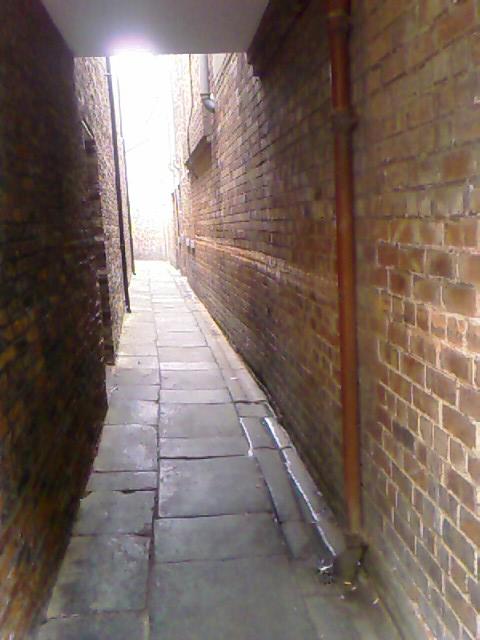
Ate O’Clock—almost a literal hole-in-the-wall place that you get to by walking down an easily overlooked alley—is the best restaurant for high-end ambiance and quality among those I tried. All the clocks here, big old-fashioned ones decorating the walls, read 8 o’clock. The dining room is cozy and intimate. The proprietor and waiter are very fun and proud of their offerings. I wandered in at 6:30 without a reservation and my table needed to be ready by 8:45...the maitre d’ was actually worried that two hours-plus wouldn’t be enough for me to fully enjoy their dining experience!


Don’t let the idea of a fixed price menu fool you—this is classy food. I started with pan-fried Halloumi cheese from Cypress, with red pepper and beet and mixed greens—salty sweet chewy crunchy yielding oily good. Dinner was salmon on pea and sun-dried tomato risotto with buttered courgette (zucchini) ribbons—crispy salmon fry, creamy risotto. A rosé from the US to accompany the meal, and a vertical strawberry cheesecake (in a glass) and coffee to finish it off. It was one of those nights that I was glad to be living a mile or more away, just so I can walk off the meal.


* * *


Funny. I’ve been walking around York as if I live here, instead of feeling like a tourist. Perhaps the difference is the fact that I’m writing so much, just as I do when I work. I’ve been “putting in” 6- to 7-hr days in front of a computer and barely noticing it, for the wonderful walks around town, the upbeat, funky atmosphere of the Evil Eye, and the walks to/from the hostel. I like this easy habit.

York Minster dominates the city, a fixture that’s easy to use for getting my bearings, or at least the signs to it are. The Minster itself is not always visible despite its spired heights, because most of the streets of York are not only three stories high, but also very narrow and twisty. I feel like a mouse in a high-walled maze as I wind from one street to the next.


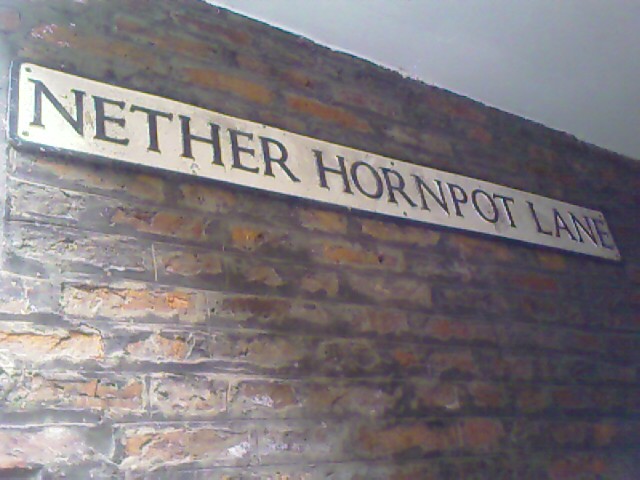
It takes me three days and lots of missed turns before I can confidently retrace the same route through the Shambles, find my way back from Colliergate or Coppergate, or point my feet to the River Ouse and know where I’ll end up. I never did find Nether Hornpot Lane again, though.


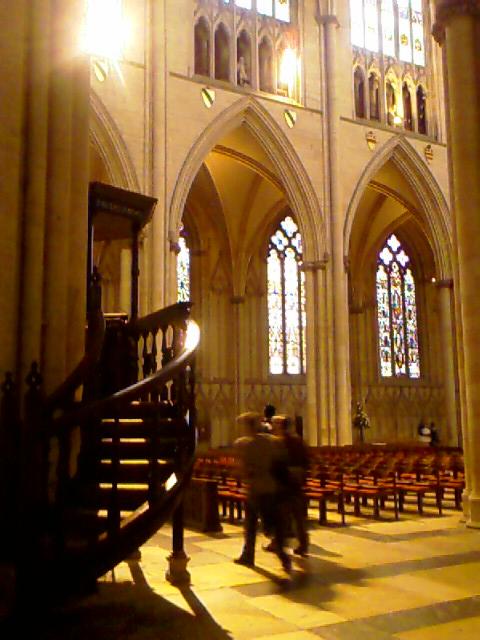
I visit the Minster, and get treated to the fits-and-starts singing of a choir practice while I wander the vaulted interior. The pipe organ roars and rings along filigreed stone and wood carvings, accompanied by an almost stifling quiet from the rest of us at ground level; the cathedral is so vast that footfalls get swallowed up in a padded hush, the kind you get when your ears are stuffed up from a cold.

The bells toll at night as I walk home from dinner. Bong. Bong. Bong. The Minster looks lovely under amber street lights. I backtrack down a neighboring street that is lined with trees, catching the same viewpoint that Cotterill had used on the chalk drawing he gave me. Except for the cars and streetlights, it’s the same as it was 20 years ago—heck, probably hundreds of years ago.

Another York fixture in my walks has been Michael the Purple Guy, who hangs around the Evil Eye on Stonegate. Let me explain Michael.

Street performer. Paints himself bright orchid. His trousers. His shoes. His face and hands. His shopping bag. His windblown-wired jacket and tie and shoelaces. His inside-out, broken umbrella. All purple. He stands still, mostly—a ludicrous, semi-gloss violet statue with puffed-out cheeks and an imaginary storm in front of him.

Some people pass him by. Some pause, wondering. Some snigger as if they’re not quite sure it’s a real person, but afraid to find out. A few figure it out. A coin clinks into his collection box. Michael relaxes his pose, leans forward, talks with the crowd. No mime is he. He calls a young child over, tells him to close his eyes. Takes a purple-coated paintbrush from a purple-coated paint can and paints the child’s hair. The boy is horrified, reaches for his scalp; the audience laughs—the paintbrush is dry. The child giggles his relief.

Elsewhere, in the twilight hour at St Sampson’s Square with its closed-up stores and the day’s detritus blowing across the cobbles, a grizzled war veteran sits in a wheelchair, one trouser leg hanging limp over the seat. He presses a harmonica to his lips. “Oh Shenandoah.” The same song the busker in Penzance was playing two months ago.

I smile into his eyes and drop a pound into his round biscuit tin. He gives me a husky thanks—more, I think, for looking him in the face than for the contribution. How important it is to acknowledge each person’s humanity. Sometimes that’s all anyone really wants. “See me. Remind me that I’m here. That I count.”

Thursday has me going to the touristy Jorvik (old Norse, became “York”) Viking Center (worth a half hour wait), lunching at the Pret Manger, and visiting the York Art Museum with Carolynne, another guest at the YHA. Carolynne is good company. She’s British, and has traveled a lot around her country—so much so that she can actually pinpoint specific coastal areas just by looking at photos of the beaches.

She succinctly sums up what I’ve sometimes thought on this trip: “Travel is 75% boredom. Just getting through one day after the other, finding food, finding a place to stay, getting from one place to the next, waiting for buses and trains.”

Nonetheless, I’d like to keep this feeling of travel going. This walk around a little, work a little, see a little, be a lot, semi-nomadic lifestyle suits me.

I could, if I chose, view my return to the US not as a return “home,” but as another step in an ongoing travel itinerary. I’ve spent three months in Britain. Now maybe I’ll spend a month in Olympia reconnecting to the stuff I’ve lived with and to my friends there, then maybe I’ll move on to that writing spot I need for six months, and then maybe Patchouli and I will WWOOF together somewhere in the US—a vineyard in California, a ranch in Wyoming...who knows? Then maybe I’ll go somewhere else in this Earth home, to another room where people dance differently and love differently from what I’ve seen so far.

I like this idea that Earth—all of it—is my home, and that I can visit any part of it I like, and that I can work and create and serve in any part of it I like, and that all that I need for living in that part of it is waiting for me, ready.

It means that I’m not “going home” next week—I am home, all the time.

Hmmm. Possible business card: “Audrey—A human, being.”

Everywhere we go is circular, round trip. Across the kitchen and back. From bedroom to bathroom and back. Home to store and back. Desk to conference room and back. Across the country and back. Around the world and back.

Throughout the day we make endless loops, large and small. Tatting our way through time. We hardly notice them as “trips” unless they feel big, like when it means bundling up the entire family to visit Uncle Ted at the other side of the country.

And at the end of each loop, at the end of each day, we return to the place we left.

Or do we?

Is not everything slightly different from when we left it—them, it, and us—even moments before?

Perhaps life is more like an ever-expanding spiral. Outward, ever outward, built through time and billions of nano-decisions that billions of people make every day.

Shall I pause to pet the cat before I leave? Boom. Perhaps I just missed the green light ten blocks away.

Shall I skip the toast this morning? Boom. I just reduced my electricity bill a fraction, saved on toaster wear, gave the microbes in the bread another day to multiply, and maybe put myself at my destination in time to just miss, or meet, a new friend for life.

I remember driving with my dad and his wife in Washington D.C. a few years ago. We were on one of the big loop freeways around the city. Noma said, “Oh, I recognize this. We’ve been on this road before.” Dad replied, “No we haven’t. That big truck wasn’t here.”

Blip. Another light bulb of truth blinked on.

You can’t step in the same river twice. You can’t drive the same road twice. You can’t visit the same city twice.

“Been there, done that” is true only once each moment—we can’t return to “that,” exactly as it was, again. Even as a time traveler (which I believe is possible), to go back to a point in time is to change that time forever, just because you’ve gone back to it.

Douglas Adams had it right, I think.

Monday, August 07, 2006

Farewell Coast, Hello (New?) York

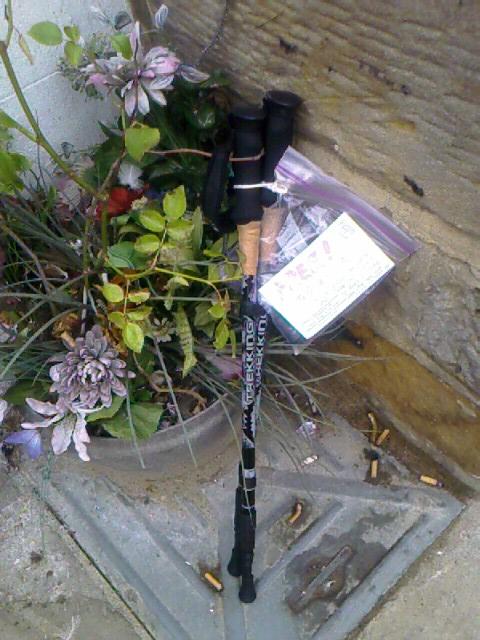
Halfway through the C2C, I decided I would leave my trusty trekking poles behind at Robin Hood’s Bay, propping them at the end of the road for someone to find for their own journey. I write a “FREE to Good Home” sign and attach it to the poles in a baggie and trundle down the slope for what is to be my last visit to the North Sea.


The village is very quiet at six thirty in the morning on a Monday. A few stalwarts are walking their dogs or taking beach photos. Milk has been delivered. Shops are closed. There’s no activity in front of the many B&Bs that bustled with people all weekend. I have the place to myself to explore afresh.


Seagulls caw and squawk and screech from every rooftop. They lift off and float down in clouds of white and gray and brown. The tide is very far out again. Rain clouds hover way out over the sea; a shaft or two of sunlight breaks like a spotlight onto the water before the cloud-mist overtakes it again.


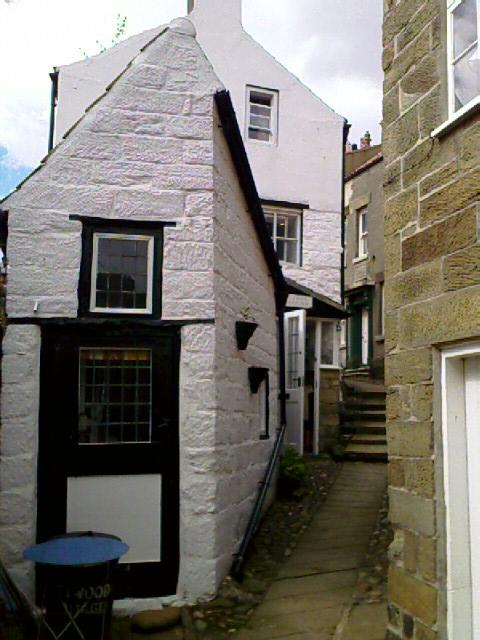
I find some lovely vantage points for views, secluded B&Bs down secluded walkways (including one cleverly signed as Upside Down Cottage), and amazingly teensy gardens at most of the cottages. These gardens are barely 8x6—big enough for a bench and a few pots, and for sharing a low fence with the neighbor’s 8x6 plot. Some also overlook the freshwater stream that flows through town to the sea. Another garden is a mere strip of paving that wraps from the front door to an alcove that’s big enough for a two-person bench. A waist-high fence and gate demarks the spot as private along the main thoroughfare of the village.

I walk home in a misty drizzle that is enough to wet my hair and clothes but that dries quickly while I pack in the room. In my last rite of ending the C2C, I remove the Sherpa Van luggage tag from my bag; no more helpers to haul my pack for me. After mailing my last batch of postcards, I intend to bus to Scarborough for a train to York.

I sit at breakfast writing all this and hear radio reports that bombs are still falling in Lebanon. The contrast is jarring.

Rather than bus to Scarborough, I accept a ride with my fellow B&B’ers Jackie and Barry, from Lincolnshire, about 100 miles south of Robin Hood’s Bay. I said no to their offer at first—my habit of self-sufficiency—and then accepted it with gratitude. No one offers something unless they want a yes, so I’m learning to say yes myself, to graciously accept kindnesses that come my way.

Jackie and Barry visit Robin Hood’s Bay and its area many times a year. They especially like to come during midweek off-season, when it’s quiet. They take me to Scarborough on a scenic route through an old estate that’s now a boarding school, through Fylingdales, around Cloughton, then along the seaside route of Scarborough, which, surprisingly, has the emaciated remains of a substantial 12th- to 14th-century castle that overlooked the harbor.

Scarborough today has a hotel row on the cliffs like Sandown on Wight, and rapidly devolves into a bay that’s fronted with arcades, food stalls, casinos, rock candy booths, entertainment venues, and so on. Lots of flashing marquis lights and bright colors and oversized plastic mascots beckoning tourists in to spend endless time and endless money. It’s like a small-scale blend of Coney Island, Las Vegas, a traveling carnival, and country fairgrounds sticky with cotton candy.

I take the 10:45 train to York. About a week is left of the trip now. I can feel it winding down, and I feel sad about its end, and a little scared of how I’ll handle the next steps. They seem so clear to follow on the map, and then get hazy in the middle distance. Yet I know now that, just as with every step on the C2C, my life is guided with love and adventure, and I’ll find the wayposts as I need them.

The train is very full today; for the first time on the trip, I’m glad to be in a first class seat. It’s quite a contrast, this train is, to the little diesel I took to Pickering. High speed. Quieter. Smoother. Toilets on board. No way to hang out a window, though. Too bad.

The trip to York is uneventful except for the snafu of a family of three who sit at the table across the aisle. They live somewhere between York and Scarborough and were supposed to be heading south to York but got on the northbound Scarborough train by mistake. As we pull up to our first stop—their home town—the husband says, “We’ve been gone an hour and we’re back where we started!” They have a good laugh. “It’s a good day for a train ride, anyway,” he concludes. Indeed it is: sunny and lots of countryside to look at.

The youth hostel in York is about one and half miles from the rail station. Check-in is easy, and the facility is quite nice. Big. Lots of amenities. And I’m locked out of my room only from 10 to 1 for cleaning; other hostels are often closed all day. I’m here for five nights, and I intend to park myself at the hostel lounge to catch up on my journaling and prepare as many blog entries as I can. I find these take time to write, and I want to have as much done as possible before I head back to the US, where I’ll finish them up.

I had spent several days in York on a trip in the mid-80s and know it’s a good place to use as a base. This time, I have less desire to tour the city than to just live here for a while.

I liked York the last time I was here. I’m not sure I like it now, though. It seems a lot more commercialized than before. Big-name stores, and tons of shops everywhere—shops, shops, shops. I don’t remember it being that way then, but maybe it was.

I walk into town and find the Minster under partial scaffolding—again (do cathedral renovations and cleanings ever get done?). Micklegate Bar (one of the five gated entrances to this medieval walled city) has been converted from a lovely artist’s studio of 20 years ago to a cheesy tourist attraction full of cheesy 3D tableaus of grimy mannequin men in a grimy prison, cheesy chopped-off heads dangling on staffs (they used to do that for real from this gate), a cheesy gift shop, and the cheesy chance to have your picture taken as if you’ve been beheaded. I wonder if the bar’s artist from 20 years ago, Brian Cotterill, is alive, let alone still living in York. I still have the beautiful chalk drawing of the Minster that he gave me.


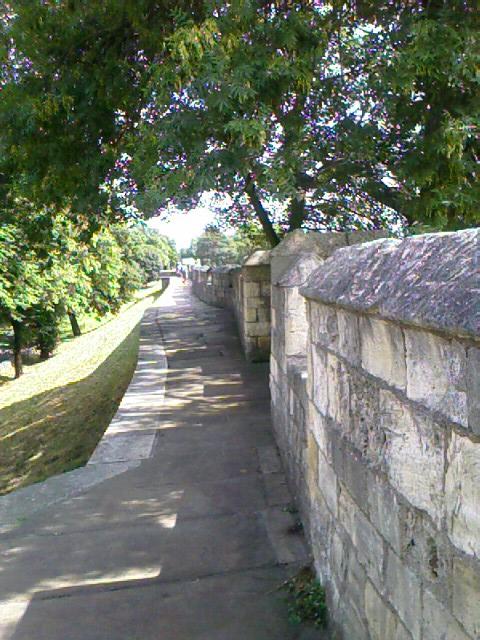
I walk the whole wall walk today, all two miles of it. I hadn’t done that the last time I was here. Part of the walk is no longer walled, but the city has embedded brass medallions in the sidewalks to show the original path. I grab a wall-walking guide and have fun picturing what the missing parts once looked like. The walk offers some lovely elevated views of the Minster, the city, and its environs. Funny to think that this town was once surrounded by fields to the horizon, instead of M roads and buildings.

At the south side, a peculiar motorized vehicle is crawling up and down an embankment, spewing grass in its wake. It’s got four independently moving wheels, a fine sense of balance, and an uncanny ability to assess its environment. Like some lumbering yellow metal turtle, it backs up and sidesteps, revolves a quarter turn, crawls down hill, pauses at a knoll to deliberate its next move, then revolves again and lurches across the hill.

I look around and finally spot the real mind behind the machine: a man standing in the shadow of the wall and pushing levers on a remote control box. Several men approaching on the wall also stop to watch the Spyder (so it’s called), taking photos and exclaiming, “That’s exactly what I need at home!”

In some parts of the walk, placards give interesting detail about a particular spot, such as the building where explosives had been stored and that went up in flames, or the building that looks like a brick igloo, where they used to store ice.

One of the bars (gates) has an original portcullis, that grid of wooden gate you always see in movies dropping down to keep marauders out of a city. It’s stored way up high in a recessed area, but its thick wood, and that of the doors that once closed up to it, are remarkable in their age.

A very non-medieval barrage of breeps and bings emanates from another stone bar. Flickering, high-tech flash of blue light reflects off the interior walls, as if a television were on in a darkened room. Inside, a band of tourists encircles a multimedia video game projected onto a table.

It’s a wall-walk race. Each quadrant of the table shows a fast-forward video of the wall walk, interspersed with stops at various locations for a pop quiz. If you answer the question correctly about where you are, you get to speed along. The one to get around the wall the fastest wins. I do pretty well on my game (237 seconds), but only because I had read the brochure and previewed some of the questions by looking over people’s shoulders before I played.