Tuesday, June 13, 2006

To Heligan and Beyond

After a long, if fitful, sleep and then a shower, I am feeling refreshed and capable again. My pack is still exploded all over the room from last night--I dump everything into a pile and re-sort and repack and purge a few more things to mail back to London.

I see now that I do better on a travel day to wear the daypack and haul the big bag all tidied and tied up for the shorter distances. Without the hip and shoulder straps flopping around, it goes better onto bus and rail racks, and there's no need to climb into and out of it every three minutes. Combining the packs is definitely better for the longer schleps from a train station to a B&B. This plan sets me in a better mood already.

I hate reading history. Always have. Had a blurb in my hotel about the room and the hotel. My brain seized up halfway through the first page. I like hearing and seeing history. Hearing it through docents and walks, seeing it through pictures and reenactments. I deal with words so much that the thought and effort of reading more today leaves me enervated and blah. It's another form of taking in from the outside, from someone else's view of the world, and being influenced by it.

Yet isn't all life creation, artistic creation, an outpouring of our experiences and views in life? Can we pour out from a vacuum? Not really. But where comes the source? Head experiences lead to head output. Heart experiences lead to heart output. Physical experiences lead to physical output. Spiritual experiences lead to spiritual output.

We out-put into the world what we dwell on the most. Our minds build a model, a construct, a way of thinking, and our words and actions and even the world's responses retune themselves to that model and construct. We see what we believe. What we choose to vibrate to, the world will give us. I'm trying to stay out of the head experiences as much as possible on this trip.

I'm beginning to experience the pull to write and to put my words out into the world, even if no one reads. I write. That's one of the things I do. I am here, and my words are the proof of it. My graffiti is left in bits and bytes on servers instead of stone all over the world. I was here. Remember me.

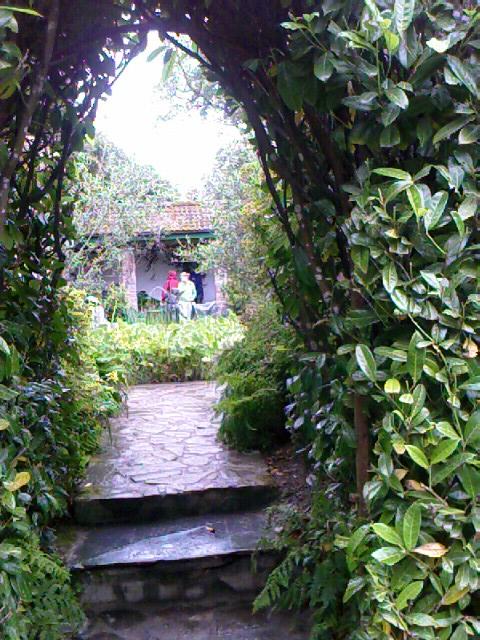
The Lost Gardens of Heligan, which I bused to this morning, are called "lost" because they were a Victorian garden that fell into acute disrepair during the war. Buildings toppled under the weight of overgrowth, gardens died, ponds choked with plants and debris. A group of volunteers began resurrecting it several years ago, and have returned much of it to its former splendor.


It is still a work in progress, with many long walks and interesting paths, areas devoted to special types of vegetation (a jungle, for instance), a lovely café that cooks with site-grown organic foods, a huge gift shop, and an amazing collection of restored plants (such as a decades-old rhododendron forest--really!--and rare handkerchief trees, like the one I saw in London).

I liked the idea of starting from the debris. Of the teamwork and design involved in creating a place like that--of reclaiming it, really. The bones of the place were there; they just needed a loving hand and lots of back-work to bring them back. I like that better than working on acres of land from scratch.


The other thing I liked most about Heligan is the mud art. The Giant and the Mud Maiden, both of them very big. I am drawn to the idea of sculpting to that scale with mud and cement. It's like a sand castle only more permanent. Simultaneously whimsical and artful and useful to a garden.

Like the brother and sister artist who created these outdoor pieces, I loved mudpies when I was a kid. Anything that makes a mess is a preferred medium for me. Is that where my sculpting needs to be put? A great feeling of enthusiasm bubbled up inside me when I looked at those: "Hey, I could do that." Anyone have a bit of garden they want to spice up?


The rest of my day was anti-climactic travel--a train ride to sprawling Plymouth through some lovely countryside in between endless tree-blur. An amusing busboard of Britain’s ubiquitous campaign to get people to use a trashcan for their gum instead of sticking it to sidewalks, buses, signposts, and toilets. A one-hour trip to Lydford that stretched to two hours because of a huge backup after an accident on a bike path that crosses the area.

Reached The Springs with ease from the flag-stop bus route at the top of the road out of Lydford. It's a cozy three-story B&B run by Mr and Mrs Wray; she's Margaret. She and her husband spend every winter in southern India, and he's over there now building a home for them to use when they're there. My room has a view onto a friendly garden with a lovely collection of June flowers, and Margaret is a great cook.

Ate dinner at The Dartmoor Inn, barely a quarter mile from The Springs along a dangerously narrow (no shoulder, heavy traffic) B road.

I am hungrier than I expected to be. Also tired after a long trip up here. My server, Val, is very game--arranging for me to sample the black pudding, a traditional slice of stuff made from pig's blood, fat, organ meat and who-knows-what-else leftovers from a slaughter. Leave it to the frugal Brits (or any European heritage) to put all parts of a pig to work for sustenance.

The stuff is very rich--a forkful goes a long way--but tasty in a meaty, slightly peppery kind of way. I could almost feel my iron and vitamin A levels go up with each of my three bites. My main meal of marinated fish over salad greens was worthy of a fine restaurant, which this has been rated as.

Finished off with a lemon tart with a dollop of clotted cream (yes, that’s solid cream, not ice cream on that wedge), waddled home, and was more than grateful for the chance to roll into bed and sleep it all off.

Monday, June 12, 2006

How Not to Land in St Austell

Today was the kind of day that strips the romance out of traveling without a car, a map, and a plan and turns it into a frustrating, stupid, and miserable idea.

The day started well enough, with my leaving my self-catering cabin and taking a 9:00am bus to Redruth, where I planned to toss my big pack into a locker and hop a local bus to visit a copper and tin mine museum for an hour or two, and then take the 2:30pm train to St Austell and book a bed with the help of the onsite tourist info center.

First off, there are no lockers at the tiny Redruth station. So I lug the bag onto the bus and leave it with Andrew, the mine's helpful docent, while I tour the three mine facilities. Lug the bag back on the bus in plenty of time to catch the train. OK, inconvenient, but so far, so good.

Then came my arrival at St Austell. I wanted to stop there overnight so I can go to The Lost Gardens of Heligan tomorrow before heading out of Cornwall for Devon the same day.

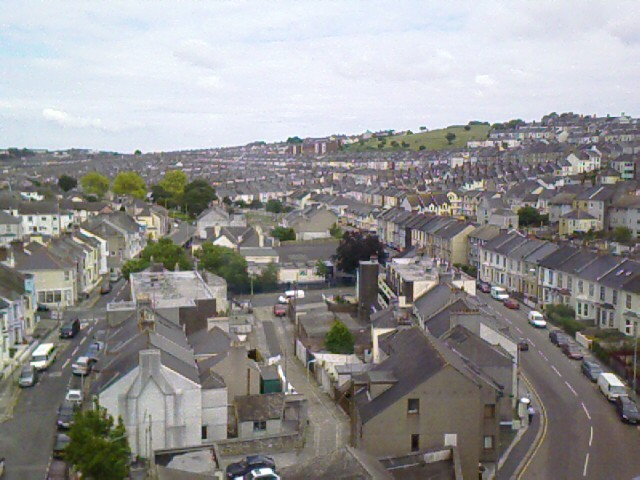
St Austell looks pretty big on a map. It's a relatively major rail stop and has a bus station across the parking lot. I pictured something like Bath, where I'd pull in by train, get help from the at-station TIC or, better yet, book at a B&B down the street. Leave my bag at the railway locker tomorrow while I took the day tour to Heligan, return to hop the train to my next destination, Plymouth. Easy.

Not.

There are no lockers at either the bus station or the train station. Since the terrorist attacks on the London subway, I'm told, the lockers are gone from all but the biggest stations. (So are the trash cans.) Damn. That had been a standby plan for future day touring. It also meant that I'd be schlepping 25 pounds on every step of my search for a bed in St Austell. And on another scorcher of a day.

Rather than being next door as I expected, the TIC for St Austell is two miles from the station. I'm feeling too cheap for a taxi, a bus doesn't run for half an hour, and using the TIC two miles away could mean even more backtracking to an actual lodging. I'd rather stay close to the train station, as I'm here only for the night.

No youth hostels are listed in the phone book, either--I found out that "hostel" also means a rest home, which, as one amused proprietor I called told me, didn't take overnight reservations.

I am hopeful when the clerks at the rail and bus stations say they think there are B&Bs a few blocks away, even though they don't know for sure where they are.

I set out in the direction of the B&Bs--and in defiance of physics, it is uphill no matter which way I turn. Strapped to my 25-pound pack, I break into a hot-faced sweat within five minutes and have no luck finding said establishments. Repeated requests from locals to point me to the streets that were supposed to have B&Bs scare up nothing but one B&B (booked) and another half a pint of sweat retracing my steps.

I head back to the train station, hot crabby and bothered, without a car, all by myself, relying on stupid public transportation that never leaves when I want it to, and stupidly entering this place without first finding a way to call into town beforehand. No nearby Internet access, no TIC that's near where people are likely to land in their city, not even a map of the city at the train or bus station.

All of which makes me hotter and crabbier and closer to wanting to cry. Waaah--I don't like this part of traveling alone, when the avenues of help are shut off or dry. And this pack is too damn heavy on a hot day. And I've mailed back the Ramblers hotel book to Norman because I didn't want the weight and I specifically wanted to go without the printed guides. Dumb dumb dumb. Damn damn damn.

OK. These feelings are familiar. It's scare. Plain and simple. Breathe. Remember what this whole trip is about. I know I have ideal lodging waiting for me--I just need clarity instead of confusion to get to it. I remind myself that I am in the right place at the right time, and that all of this is good. Yeah, right.

I ask for a definite lead from my intuition--make it really clear what direction I should go.

I am facing the first street out of the rail station, a shady downhill curve at the outskirts of town center. The elusive B&Bs are supposed to be to the left and behind me.

Movement catches my eye. A crow is flying straight down the road ahead and veering to the right over the trees.

"Follow it," I think. "Go that way. This is your lead."

"Stupid," I answer. "That's not a sign. It's a bird."

"It's the lead."

"This is irrational."

"OK. So it's irrational. Intuition is like that. Follow the hunch."

"This is irrational," I say aloud, "so it must be right."

As I head down hill, I notice the bird has flown over the yard of the big church that the bus clerk had pointed out as a landmark. Church people can help people find lodging. At least they used to. If anyone's there.

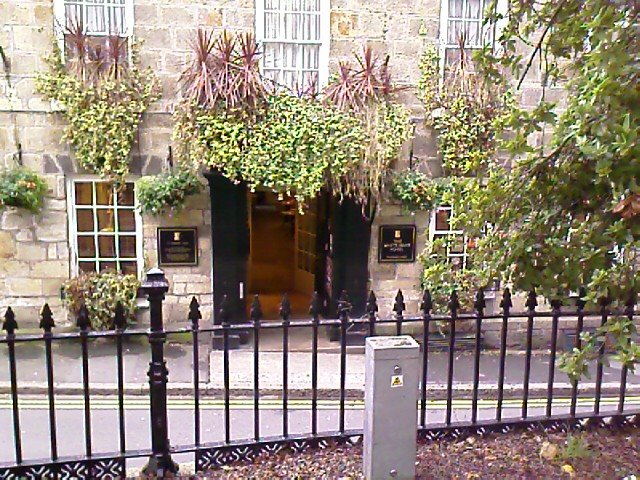
I climb the stone steps to the shadowed yard, still looking for what Crow had been trying to tell me. Across the street and now visible from my elevated position is the White Hart Hotel, home of St Austell ales.

"There. Check it out."

"Probably very expensive, by the looks of it. Hotels always are."

"Find out."

Out of more than 50 beds, they had only two rooms available tonight--both of them a double at £60, twice my target maximum rate.

"Can you do any better?" I ask the young man, Scott, behind the desk. I am breathing a little hard, and sweat is pouring down my forehead and into my eyes. Now that I've stopped walking and am inside a warm and still lobby, my overheated body is offloading liquid from every pore. I am sure I look like I used to after PE every day at school--beet red in the face, sodden hair flat to my head, a generally unflattering picture of physical fitness. I don't want to remove the pack if I need to keep moving, so I peel my paper fan out of my waist pack and breeze my face.

"No, sorry." Scott seems truly pitying of this woman who is wilting before him. "We've got the same rates throughout the year, so no seasonal differences. Maybe the Queens Hotel down the street."

He calls the Queens. No openings. Before we can go further in our interaction, he takes an incoming call for a reservation. It's from Switzerland and it turns exasperating for Scott. The caller can't locate the expiration date on his card in order to reserve a room. Scott patiently--and repeatedly--tells the caller how to read a credit card while he shares a rolled eye and a grin with me.

Then he starts explaining into the phone, "No, that's Exeter…400 miles away…a different county. No, I wouldn't know about that hotel--that's 400 miles from here. Yes. Yes. No. Thank--thankyo--yes, alri--that's right then, goo--no, not there, yes, goodbye then."

He finally manages to hang up and we are laughing. I am still fanning my face, but the sweat has dried, and I have managed to consolidate what fortitude I still have left. "Can you recommend any other hotel?"

I must still look rather pathetic. "Tell you what," he says, "I can give you the double room for £50, but that's the best I can do."

"I'll take it," I say with a flood of thanks. I dislodge my bag from my back as he takes my information and tells me that the cost includes a full breakfast.

"Cooked?"

"And continental--you can do both if you want." Score.

He carries my bag up two flights of stairs while I plod up behind him. Score.

The room smells of flowers and has a bathtub the size of a wading pool and a big, deliciously phlumphy double-bed. Score.

I don't care how much it costs. I'm in a real hotel for the first time in a month after an aging hotel, a Spartan YMCA, a B&B with cold breakfasts, and a musty smelling self-catering flat that requires coins to keep the electricity going.

I chuck off my sweaty clothes, wash my face and neck, break into my pack for my culottes and a fresh shirt. Off with the socks and boots and foot wraps. On with the aerated flats. Ah. I'm human again.

Refreshed, I head downstairs to ask Scott for pertinent information: TIC number? Check (too late to call though--they're closed).

Internet? Only at the library half a mile up the street. Sigh. I need that to arrange lodging for rest of my Dartmoor stay. I'm not going to land in a town without lodging this way again...especially since I'm heading deeper into the countryside, away from civilization, where TICs and rail stations are progressively smaller, or nonexistent, and open fewer hours.

I manage to get to the library a half an hour before they close. Their Internet has just crashed. Not available. Not no way, not no how.

Grrr. Can I scream now?

The librarian and I resort to old-fashioned research for help finding lodging in the Devon area: a row of low-tech phone books upstairs. We pore over a few with my Dartmoor maps, and he leaves me to it.

I manage to call a few places in the area, remembering that I really do have enough cash to take a taxi when I need to, or that I can often find a host who might pick me up from a station 15 miles away. Information, information.

I rough out the next few days with yellow pages and train depot help, grab phone numbers to call from the hotel once the library closes. I feel relieved to have a plan after today's bit.

As I work, I consider what I've learned about how I prefer to travel and the silly assumptions I made that escalated my scare. I just expected St Austell to be bigger than it was, and discovered that getting around the small towns only on foot and public transport is tricky. I remember someone telling me a few days ago--was it Norman?--"It's often the last 14 miles to a destination that are the hardest."

I've also decided that staying at least two nights is best if I want to see a place, and that I do better having an idea of where the TIC and my lodging are in relation to a train or bus station before I arrive in a town.

When I'm traveling with only the small daypack, all of this is much easier. I keep wanting to downsize more to make the big bag lighter, but I'm already thin in the pack while still being prepared for weather shifts of rain and cold later in the trip. I haven't found much more to jettison.

I finished the planning by calling for lodging through Salisbury from my room, combining youth hostel and B&B and asking proprietors for help getting phone numbers and bus info as much as possible. It felt good to ask for and get help, something else I'll remember to do more often.

Just looked at the clock. 7:30pm. I've spent four and a half hours putting together lodging and travel plans for the next 5 nights. Better than feeling stranded again, or getting stranded for real.

Ate dinner at the hotel and nodded off soaking in the tub. Big bath towels, big bed, four fluffy pillows. Really needed this bit of pampering tonight. It's only 9pm and I'm in bed, pooped and feeling better about where I am. Tomorrow's another dayrise.

Sunday, June 11, 2006

Room for Chats and SWC Walk2

It is 1:30pm already, and my bus back to Mullion is arriving soon. I have just spent the last few hours walking and photographing the six miles from Mullion Cove to Porthleven on the Southwest Coast path. I am feeling proud of myself, hot, sweaty, and ready for home.

I sit on a rock wall by the main road that skirts the sheltered harbor, eating a freshly grilled burger and onions, bought from the food tent just across the street.

"Real Cornish beef, just caught this morning," said the barbecue cook. "Perfect flame grill, too--12 months of black on it." His enthusiasm as chef is matched by his prowess. The burger is good. Or maybe I’m particularly hungry. The melting Snickers bar I ate an hour ago has worn off.

A local festival is going on, a fundraiser for something called the Porthleven Gig Club. People mill around a small green to buy home-baked breads and cakes, grilled burgers and hot dogs, and--yes--freshly brewed tea poured from teapots instead of an urn. Kids kick footballs around, shoppers flow through a lane of flea-market tents, and toddlers waddle around in the sun with parents in tow.

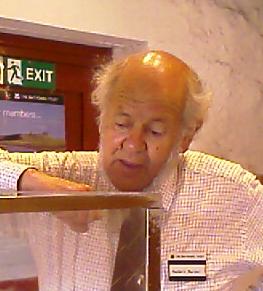
I am across the street from the hubbub, joined on my rock wall by a wiry man with thinning gray hair, my self-appointed companion of the moment. He is wearing an aqua-and-green cravat under a striped long-sleeve shirt. His smile is wide over deeply tartared teeth; I remind myself to floss more often. He holds the last quarter of a blackened hot dog in its bun, undoubtedly obtained at the same tent where I bought the burger.

He had stopped in his sidewalk stroll to ask if I was taking a break. I told him I'd just walked from Mullion Cove.


You should be part of our gig, then," he smiled and sat down beside me. "The gig," he said, indicating the long crewing-like boats and their many oars waiting to be launched in the harbor, "is 300 years old. Used to meet the ships coming into the harbor and steer them in.

"Every port in Cornwall has one, and we all meet at each other's port for an annual race. Helps us raise money for the boats. They cost £15,000. Course the tide's out right now, but later in the evening it'll be in and the race will start."

"The tide is out" is an understatement--every fishing boat and dinghy in the harbor rests in mud.

He asks where I’m from and I tell him the Seattle area.

"My best friend is from America," he offers as I finish my burger and pick the onions from the paper. "Came to spend three years with the Royal Navy here as a transfer. Really fine fellow. Everybody liked him. Went back home. We'll be going to Boston soon for a visit. He lives 300 miles from there. He's going to take us to Civil War sites. Fascinating that. And I want to see the site of the Tea Party.

"He's into computers now, Rick is. I absolutely detest the things. I'd rather have a steam-powered radio, I would."

He is on a roll, and has forgotten the cooling hot dog in his hand. "One thing I hold against the Americans, though."

"What's that?"

"What they did to that British man's body. Dug it up and cut in into pieces so everybody could have one."

"Who was that?" I am expecting some historical figure I'd forgotten; cutting up bodies as relics is an outmoded practice from what I hear.

"Alistair Cooke. Was in all the papers. 'Bout three months ago."

What? Masterpiece Theatre Alistair Cooke? Surely not. I snorted, suspecting that he'd been reading a British version of the National Enquirer. "Sounds like some saint being chopped up for distribution."

"Oh, he wasn't that famous," he says seriously. "He wrote the history books and programs about America. But why they had to do that..."

He trails off, and I turn the topic to Cooke’s contribution to the world, which he warms to. My bus soon arrives, I bid my old friend good luck on the race, and he wishes me well on my travels.


The walk north today was much the same as going south, only with the Atlantic on my left and more signs of civilization to pass by: the Marconi Center and a monument commemorating the first transatlantic telegraph transmission; the Mullion Golf Course, which runs right alongside beach grasses; a Porthleven man cutting his lawn with an electric mower (yes, complete with extension cord) that’s as quiet as a vacuum cleaner; sunbathers--almost fully clad--seeking sand or flat rocks to lay on; a row of lookalike houses cum B&Bs, self-catering units, and holiday rentals along the Porthleven harbor.

The world changed subtly around me on the walk. Cliffs and my distance from them altered the sounds of waves from rolling to foaming to crashing to silence. Smells shifted on the wind--cows and sea and seagulls--and my skin felt hot sun, cool breezes, muggy and sticky sea air, chilled shade from the rare boulder or building. Vast views of the coast dropped to enclosed beaches and a freshwater pond, gave way to rock walls and paved roads between homes on the way into Porthleven. On a footpath, it's always worth looking back as well as up and ahead.

It was a day to notice small things—flowers and butterflies, stones and birds, a kestral hovering on the breeze--none of it the same, each moment newly minted. Granite faces eroded smoother one windsweep at a time. The path eroded deeper from my row of footfalls. The trails moved closer to cliff edges with each blow-off of sand.

Arriving back at Mullion, I take cream tea refreshment at Colrogers Creamery, a deli that David and Lisa from Farmborough had said to look for. It is a block from where the bus dropped me off.

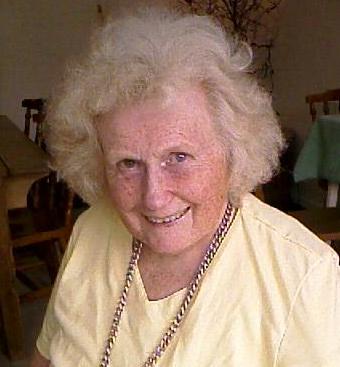
There I meet Ann, 73 years old, an amazing historian of British and contemporary events, sharp as a tack. She was born in Hertfordshire (north of London), and moved with her mother to Cornwall in the 1960s. She lives in Mullion now. I ask if I can join her for tea as I wait for fresh scones from the oven. She's about halfway done with hers.

I sugar and cream my tea, and she begins to tell me about the British monarchy and many Scottish skirmishes. I listen attentively, for being in the actual country of these events brings a new life and perspective to otherwise dry historical facts. By the time I am slathering butter, thin homemade raspberry jam, and extra-click clotted cream on my hot scones, she has moved on to World War II and touched on the Romans, with a few American-British tidbits thrown in. "But the best thing that ever happened to Britain was the Ice Age," she proclaims, "when it broke away from the Continent." And that "Edinburgh has one thing wrong with it. It has no river. Every proper city has a river."

By now, her pot of tea has diluted to "gnat's pee" from so many refills of hot water. I pour into both our cups from my fresher pot, and she moves on to more personal topics. She used to raise chickens during the war, but didn't live on a farm. "I lived in a psychiatric ward when I was young, and used to run away from the asylum to visit London theatre." She says this with a twinkle in her eye, and I can picture the mischievous girl she once was. "The asylum folks got used to my absences, and they never gave me any trouble for it."

She reminisces about Dorie, a non-egglaying chicken they had for Christmas dinner, and about Charlie, another chicken they ate the next year. "He was a marvelous cockerel. Used to drive Danny [another rooster] all over the yard for the ladies."

Soon both our teapots are empty, my belly is full of jam and scones, and my waistline is filled with another dose of butter fat. I bid this other new old friend goodbye and head back to the cabin, stopping by Julia's shop and happily finding her there (it’s Sunday).

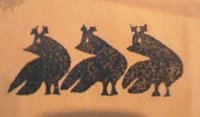
We visit in between customers and have fun making stamped swatches to sew to my visor. I select personally mixed teal and purple paints, flower and sun stamps, and a charming bird stamp inspired by a Mexican pattern Julia had seen on her travels.

We laugh like school girls and make plans to visit the Eden Project (a self-sustaining biodiversity center) together the next time I’m in Cornwall. She’s promised to mail me a hag's stone (a sea pebble that has a natural hole through it) for good health, and I’ve promised to keep in touch over postcards and email.

I walk the remaining quarter mile to my cabin, grateful for a perfect day of solitude plus friendship.

Postscript: The Alistair Cooke story apparently has some gruesome truth to it, but it’s more about reputed mortuary-based bone snatchers than grave diggers, and was an event in Dec 2005. Google Alistair Cooke + bones, if you're into that kind of thing.

Saturday, June 10, 2006

Friend and Fog, Footpaths and Faith in Cornwall

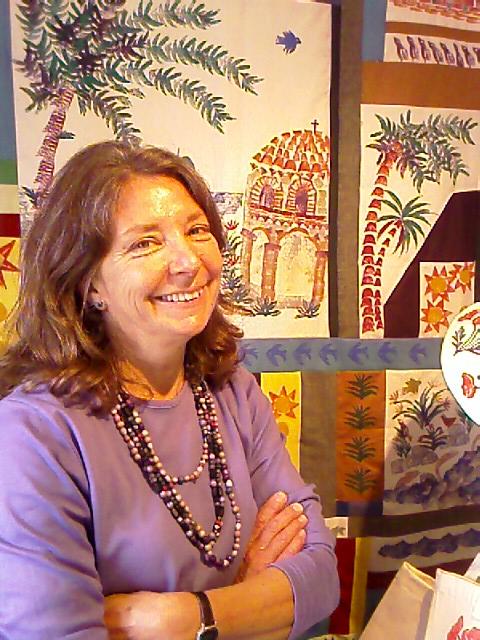
Meet Julia. She's a shopkeeper, artist, extensive traveler, fabric master, and wisewoman of the world--a gem tucked away in a little shop of her own called JT Crafts, at the Mullion Craft Center at the bottom end of town. I had met her on Wednesday, during my milling-around-Mullion day, and liked her company and her product so much that I went back today for another visit and some shopping after buying my dinner fixin's.

She's originally from the east coast of the US, but her travels in France, Italy, and other countries have given her a cosmopolitan, European grace. She lives in Marazion, just across the water from that famous St Michaels Mount, and currently sells fabric bags and home goods that she stamps in colored paint using her own inspired designs. Her passion is artistic quilting. That's one of her quilts that she's standing in front of there.


I had a wonderful chat with her today about life changes and motion, and the success that comes when we take the opportunities that fall into our laps instead of forcing them to happen, or trying to figure them out. I know she's someone who will hold the vision of my falling into my own passion and taking it in as a career with ease.

While finding my passion and vision is the ultimate purpose of this trip, the idea was far from the top of my list today, which started out as a vague, miss-the-bus, out-of-whack-with-the-world's-time-clock kind of day. Vague on my planning, and not clear how I'm supposed to go through the day given the opening and closing times of the various businesses I wanted to go to.

Shopping was the goal, then call my bank, catch England's first World Cup football game at a pub this afternoon, finish shopping, go to the post office. A day of errands that required some coordination of lengthy back-and-forths to the cabin, bus stops, village shops.


All morning long I kept getting 20- to 35-minute openings that were too short to double-back on to do something else on my list, so I'd get busy on the phone or in a store waiting for the bus. I sat amid fragrant valerian in a Mullion cemetery for some quiet space and a good cell signal (the cemetery has the best mobile access here--go figure) and called BofA to extend the use of my credit card abroad for the next month. I think this is a pain to do monthly during the trip, but it does help protect the card from fraud.

Phone calls done, I missed the hourly bus to Lizard by the need for a toilet (it drove past just as I headed in) and nearly missed the next one while killing time making a miscellaneous purchase. I ran out of the shop leaving my little pile of goods on the counter. "There's my bus!"

I was baffled by this consistent tardiness (I'm usually many minutes ahead for transport while traveling) and soon realized why--weeks ago I had set my watch just a few minutes slower than local time, and it made a difference now that I was relying on punctual public transport. I reset it a few minutes fast for cushion time.

Got to Lizard expecting to do some local-crafts shopping and thought, "This is it?" Tourist shops every one of them, some tackier than others. Feeling bored and unfocused, I considered what I should do next with an hour or so before the next bus back to Mullion.

My feet started moving and I ended up again on the Southwest Coast path, this time going to Lizard Point, the southernmost end of the UK. The sea fog was thick today and the lighthouse was closed to public viewing so it could do the work it's designed for. The foghorn was shrill, sounding off every 30 seconds or so. When I was near the lighthouse, the blare was piercing and painful and startling through the silence. Away from it, it became background noise.


The cliffs at Lizard are marked everywhere as "Crumbling, Stay Clear." They nonetheless call walkers in, and the boulders of the cliffs are well trod.

I walked back to Lizard village only to--dang it all--miss the next hourly bus home by 5 minutes. Took solace in an ice cream--chocolate toffee, single scoop, plain cone--at a souvenir shop and chatted with the proprietor about cruising. He's done a lot of it with his wife and loves it.

It was muggy today, overcast, with only a bit of direct sunshine earlier. The England-Paraguay football game was on the telly in the shop. England was ahead 1-0, from a goal scored by the opposition into their own net. I could relate to the situation.

My irritable, vapid mood was finally salvaged by yielding fully to what came my way. I gave up on The Plan and adjusted to what was available to do. I returned from Lizard, caught the shopping I had left behind at the sundries market, bought food for dinner, then went to JT Designs to purchase some gifts, and walked out feeling better for my chat with Julia.

At the cabin, I packed up goodies to mail to London--unneeded maps, gifts, stone bits I've collected for a mosaic to do with Tim and Cheri when I get back. Boxed it all up at the post office and sent it on its way while the postmaster and I talked about investment options for bonds and high yield savings accounts that UK residents can obtain at the PO.

The post offices here are mixed breed. In addition to being a stamp and mailing service, village POs are often a combination of financial planning venue, gift shop (bracelets, earrings, fair trade items from Africa, crystal chatzkas, statuary, etc.), grocer, and office supply store (pens, art supplies, children's books, postcards, gift wrap, cards). Something you might get if Hallmark and 7-11 merged with UPS and had a handshake deal with Merrill Lynch on the side.


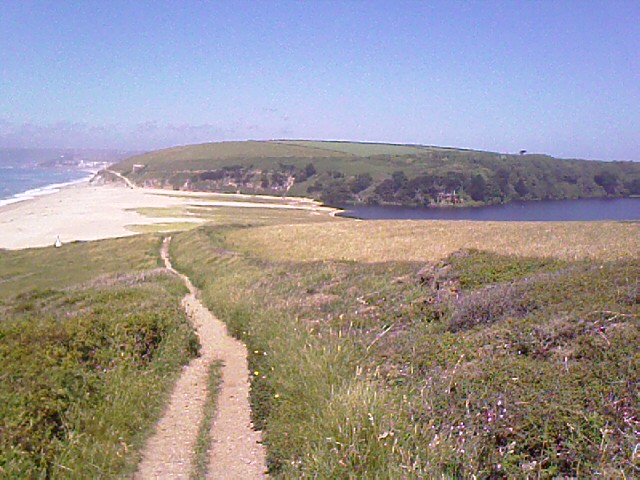
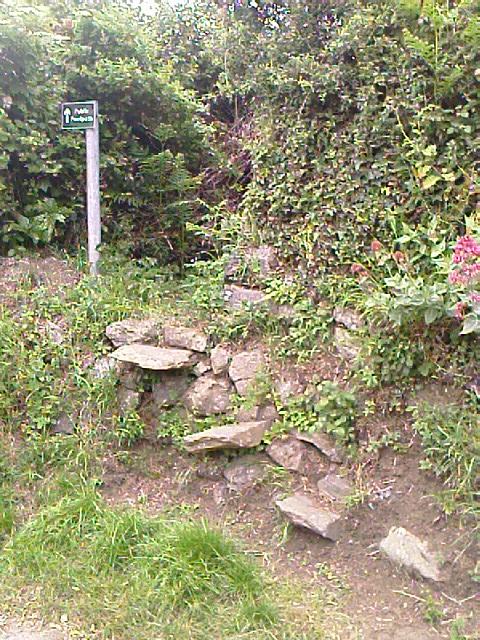
All these tasks done and businesses closing, I felt unusually unburdened. I carried only a jacket, visor, and shoulder purse I bought in Penzance and walked the residential area beyond the post office. I headed down public access footpaths that crossed streets instead of fields (less chance of getting lost), then found a wonderful footpath (its step-up stone stile and entrance shown here) that edged a small orchard and led to a freshly tilled and planted field--a stark brown contrast to all the surrounding green.

I spent 20 minutes making a decent video of walking that hundred or so yards, climbing through two stiles and hearing the twitter of birds and the crunch of my boots on forest litter. Pretty cool.

I kept on following my nose and ended up in a gravel lane that looked private and like a dead end. A young couple pointed me to a lane filled up by rusting blue truck. "The path continues down there. They just replaced the stile. Then go straight across the horse field. You can't miss it."

Now the four simple words "You can't miss it" have, in the past, struck me into a panic. If something couldn't be missed when it came to directions, I was sure to circle around it eight times before I found it. And without an OS map here, I'm potentially walking blind when it comes to footpaths across fields.

Taking the cue to look for a new stile, I squeezed carefully between the truck and a feathering of stinging nettle and pressed on into an overgrown grassy trail. A horse gate hung a bit crookedly at the lane's end. Not the new stile, so I turned left along a faint trample of grass that edged the field fence.

The stile was indeed new--a gate, actually--and I passed through into acres of closely cropped grass with a few draft-size horses grazing many yards away--and no clear trail.

"Straight across" the fellow had said. But which way was "straight"? I couldn't see the other side of the field for the hill in front of me. Memories of getting lost as a six-year-old at a family camping park rushed in, and I nearly doubled back, acutely aware that I had only a vague idea that Mullion was somewhere to the left of me.

I got a grip on my confidence, took a bead on the gate, and aimed for a telephone pole halfway up the hill, where I again took my bearings and the chance to enjoy the pretty horses. Of course, out came the camera. Click.

Up came the brown-and-white piebald boy, walking leisurely, stopping at the second camera click, coming again, drawing the attention of a bay with a wide blaze and three white socks who came down from my left and kept the piebald from me with a threatening nip.

Another bay wandered up for a sniff and a scratch. I wanted to scritch them all, but decided not to. It was enough that they allowed me into their field, and I thought it best not to push the introductions, as well as to honor the code of public access--don't mess with the animals.

I struck out over the hill amid 20 horses that ignored me and tracked along the opposite hedgerow looking for another stile. No such one. Finally came upon a pipe farm gate that led to the concrete yard of Newton Farm--dairy cows and riding stable and self-catering holiday cabins.


A man was pushing a stroller through the bumpy stableyard; he was from Gloucester, and staying at the farm on a 3-week holiday. I asked him for directions back to Mullion (turn left on the road out of the driveway), reached a residential section where I asked for directions again from a family parked on a six-foot sofa on their front lawn, played with a white-pawed tabby cat that scampered up and rolled around for attention in the gutter, and entered Mullion on a back road into the cemetery that I'd visited earlier in the day.


Voila. My first successful foray into walking public paths by instinct and coming upon help every time I needed it. I won’t be giving up those maps I bought for the Coast to Coast walk any time soon, though.

"You are brave to be traveling alone for so long."

I've been hearing that frequently. From the postmaster in Mullion. From shopkeepers in Bath. From TTouch folks. From fellow diners at pubs like the Old Inn where I had dinner tonight. (I don't recommend the lasagna or garlic bread, but the fresh strawberries and cream are great.)

I don't see this trip as particularly brave anymore. It's what I do. I exist. I move around on the landscape. "Lovely planet, isn't it?" I want to say to people, as if commenting on the weather.

I think it's brave to wake up every day and go to work. I think it's brave to raise a family. I think it's brave to talk to strangers. I think it's brave to take life with ease when so many around us want to emphasize the struggle.

I'm on holiday for three months in a country that speaks basically the same language I do, that has similar climate, similar social structure, similar culture. Is that bravery? Yes, in its way.

Yet isn't what we call bravery in others a reflection of our own wishes and fears and seeing someone else face them? Sometimes all of us need wayshowers. Sometimes all of us are wayshowers, most often when we least expect it. Perhaps that's what I'm being when people label me as brave.

Long before I got on the plane for this trip, I purchased a yellow "Courage" band--like the kind that Lance Armstrong has made popular with his "Live Strong" slogan. I wore it for weeks, 24/7, because I needed the reminder in the days ahead of my trip. "Courage, dear heart," the Albatross Aslan whispers to Lucy as they circle the Dark Island, spiraling inward into a place of nightmare and no escape. The white light guides their course to safety.

Courage. I twiddled often with that bracelet weeks before the trip. Wore it in the shower. Reminded myself of it each time I went on a training walk in my new neighborhood of East Olympia. Then one morning I took it off. Didn't need it anymore.

A few days later, exactly two weeks before leaving, I was getting a bit scared and distracted again. I hadn't done any planning to speak of. Time was running out to read all the guidebooks I’d bought, to note all the places to go, the travel pitfalls to avoid, the Rick Steves-recommended hotels and restaurants. I didn't have a complete itinerary, only a few loosely defined regions to go to.

A familiar panic was trying to empty my ribcage and rattle around my heart cavity like a loose pinball. I sought guidance from angels, my guides, my intuition. Nothing. Too brain-locked to take it in.

Then at the dentist's, I spotted another rubber bracelet in the parking lot. Purple. A bit folded and dirty. I almost ignored it. Couldn't. Turned it over. "Courage."

I laughed and wore that one for the next two weeks. It's now wrapped around my floral thermos that I bought for the trip at Starbucks because I liked its happy spring colors.

Courage. Yes, I suppose so. The courage to hear and follow intuition in the face of all opposing reason. The courage to stop pretending to be scared, separate, unguided, unable, not ready.

"Three things to never say," stated a recent Yogi tea bag tag: "I can't. I'm not ready. I don't know."

Every day I am ready for all that awaits me. I was ready that day two weeks ago to take a 25-pound pack six miles, even though I'd never done it before. I was ready a few days ago to pass between heathland cows on the Southwest Coast path. I was ready today to cross a pathless field for the first time, not knowing what waited on the other side. Small fears. Small successes.

I face each day knowing that all time and events that have come before have prepared me for everything that awaits this day.

If this is courage, then, yes, I am courageous. I am ready. Aren't we all?

Friday, June 09, 2006

Drat, No Pirates at Penzance

I've been planning since Wednesday to take this trip today--a 10am bus to Penzance. Well, it's a hired coach, actually, organized by Pat from St Mellanus church in Mullion. Once a week, the coach takes folks to several points local, only £3.50 return fare, compared to £8 by public transport. Today's a shopping day in Penzance--a monthly occurrence according to the schedule tacked to the St Mellanus church public bulletin board outside the cemetery.

It is very windy on the mile walk from Criggan Mill into Mullion to meet the bus. I feel free and unencumbered, and lift my arms and face to it all. My skirt billows around my ankles; wind whips my hair and cools my bare shoulders against the morning heat. Glorious.

I board the plush hired coach at the appointed spot in front of a Mullion art gallery, and Pat sets down the ground rules for shopping. We are to start at the top of the hill and work our way down the street, where the bus will be waiting for us at the bottom. We can wander farther up and off the main road if we wish, just be sure to be back to the bus by 2:10. It will leave promptly.

I look around the bus and am not surprised by the turnout. Seated around me are mostly elderly women, two with their husbands (presumably), and two solo-traveling men who are also OAPs ("old age pensioners," UK-speak for senior citizens).

Our quarter-full bus starts out over some of the same roads I traveled yesterday to St Michaels Mount. But today I am high enough in the coach to see over the hedgerows in many places. Beyond are field after field of potatoes growing, cows grazing, hay waving in the wind. Clear to the horizon. We occasionally stop along the way to pick up more passengers.

Penzance is a shopping mecca--full of tourists coming to buy souvenirs and our busload of locals coming to buy what can't be bought in Mullion, which is just about everything beyond groceries, sundry gifts, crafts, paintings, and hardware crammed into a general shop or two.


I do only shopping for myself today. Most of the interesting shops (non-clothing, -sports goods, and -drug stores) have the same kind of imported goods I find in the US. Scarves and skirts from India, lots of gemstone-and-incense shops, and jewelry from Mexico and Tahiti.

The one Cornwall-crafted shop sells delightful things that are too large or fragile to carry--paintings, wood sculpture, candlesticks made of stacked beach stones (I can just imagine myself shipping a pile of rocks home--Christy, do you need any more on the Vashon beach?), glass fish, ornaments, wall hangings, mosaic mirrors, and the like.


Local bakeries offer an amusing collection of "American Cookies" and "Mickey Mouse" meringues in addition to the usual fare of muffins, biscuits, tarts, and so on.


I shop for incidentals I need--sports tape (Elastoplast) at a Boots drug store to replace the black stuff I bought in Olympia that keeps gumming up my socks and turning my feet black; liner socks at a hiking store to replace the old ones I brought that are now hopelessly gummed up by the black sports tape; a travel set of water colors from a cramped little art shop; a multicolor shoulder purse from that India store, to go with my black skirt; leggings from a dancewear shop to go with the same.

As in London and Bath, I enjoy wandering the streets and back streets, peering into shop windows, asking clerks for directions and getting mixed information from them, then wandering around some more and stumbling upon another source for my needs. I like this following my intuition, going without a map today. I'm better at it than I would have given myself credit for before.


On the road at the top of town, I hear the strains of a harmonica playing "Shenandoah." An American folk song in Penzance? I follow the tune to its source: a street musician who looks like he's been transplanted straight from a Louisiana bayou. All he needs is a jug of moonshine stamped with XXX to complete the image.

By now he has launched into a spirited rendition of "Oh Susannah," whereupon I just have to ask for a photo and record him playing. He obliges with magnificent fanfare, and I am happy to leave him a pound coin in his open leather pouch on the ground.

I stand against the railing of the elevated side of the main street to people-watch as I eat a lunch of steaming steak Cornish pasty. Across the street, a well-muscled man, tanned, balding and white-haired, strides by in shorts and a muscle tank shirt, a bulky knapsack slung from his right shoulder, a walking stick held horizontal and swinging unused in his left hand. He is covered in tattoos. They are on his legs, arms, back, neck, and chest.

Those kinds of things stay with you, tattoos do, as reminders of rites of passage or records of rash decisions. Here is a man who had undoubtedly aged into them, and I wonder what he thinks of them now. I often wonder the same about the youth I see today who use their bodies as human canvases.

What will these people be like in 20, 30, 40 years, when the significance of the imagery--and how that imagery reflects who they are today--may have worn off? Clothes we can easily change and discard as personal style evolves. Permanent artwork stays with us. No surprise that I haven't committed to a bumper sticker for my car, let alone a tattoo for my body, although I've been thinking of donning a small one (a tattoo, not a bumper sticker) for years.


I take tea and lemon cake for dessert at a bakery near the waterfront, and end the day with a visit to the breakwaters of the beach. In some places the undertow equals the flow, and waves seem to stand still--a row of white rolling in place until the currents shift and the curl fades or is pushed forward.

I stand on the boulders to salt spray on my face and arms, salt air in my nostrils, and inhale deeply of sea and wind. It is a few minutes before 2pm. For now, walking to the bus can wait.

Thursday, June 08, 2006

Bus, Sink, or Swim to St Michaels Mount

Today is my first official bus ride to a tourist destination--St Michaels Mount, an hour or so to the west in Marazion (mar uh ZIE un) on the Cornwall coast.

We are barely a few miles from Mullion when a seven-year-old girl behind me spots a seagull and screeches with delight. "Look!"

"I see it," says Grandma beside her. "Is that the same seagull you were singing to? Maybe it's looking for you." I instantly like this woman who encourages a child to commune with critters and to imagine possibilities that we adults often forget.

A few minutes later they stand up to take the stop just past Porthleven, about 6 miles out of Mullion, and pause to talk with me. The little girl is blonde, in shorts and tank top and a pink cotton hat that folds down in the back. We all smile at each other, they both wish me a happy holiday, and they wave goodbye to me from the side of the road as the bus pulls away. This brief but friendly interchange is just one of many that I've experienced here in the countryside. People greet me on the street, call me "love" and "darling," and label everything as "brilliant," "absolutely brilliant," or "magnificent." Very different from the diffidence of London and Bath.

Three preschool girls are now singing at back of the bus, a farm song that goes "The dog on the farm goes woof woof woof, woof woof woof, woof woof woof, the dog on the farm goes woof woof woof alllll daaaay lonnnng." On through cows, cats, chickens, geese, etc. Then one of the girls pipes up, "The people on the bus go up and down, up and down, up and down, the people on the bus go up and down allll daaay lonnng." Boy, does she have that right. The road we’re on is anything but smooth. The singers soon move on to Itsy Bitsy Spider, Twinkle Twinkle Little Star, and an "I love you...you love me" sung to the tune of Knick Knack Paddywhack, Give a Dog a Bone. Plays with my head, that one does.

The bus travels steadily along hedgerow lanes; I can't see much because the hedgerows are so high, but I can smell freshly mown hay, cow fields, and the sea.

Marazion is an ancient market town--I think the name even means "market." I witness an astonishing feat of bus navigation down its narrow lanes. A very wide propane fuel lorry is parked facing us on the left-hand side of the road, half on the sidewalk and half in the lane, leaving no space on the road for our wide-bodied bus. Our undaunted driver slows to about 10mph then heads right onto the right-hand sidewalk, where we jounce along an inch from the buildings and door jambs. I could have reached out the window and drawn a line right along the plaster as we went.

Such sidewalk driving is common here, both for buses and cars that must constantly pass each other on roads that were either built to be single lane or that become single lane because of parked vehicles. Passing on streets lined with hedgerows--just about any road linking towns around here--commonly knocks a bus's side mirror out of whack and the driver later pulls over to adjust it. Today’s chauffeur made it through Marazion without a scratch or bump.

St Michaels Mount is its own tiny island just off the coast--or at least it’s an island most of the day. As I disembark from the bus, the tide is out, the stone causeway to the site is open, and the air stinks of rotting tidepool and sharp salt.

I reach the head of the causeway at the beach and ferry workers call out from behind me, "The causeway is closed, you must boat across."

I look ahead. Many folks are already halfway across and sloshing through mere ankle-deep water. Beside me, others are streaming onto the causeway like a line of migrating refugees, stripping off shoes and sandals and hiking up trousers. I do the same with my skirt-culottes and gleefully wade onto a causeway that was built in 1425. Its lovely reddish-orange stones are soft-edged, uneven, and less slick than I expected.

The tide is coming in quickly, however, and soon I am calf deep in water that shifts from cool to warm to icy cold then back to warm around my legs.

A black crab, 3 inches across, scuttles sideways under the clear water and nearly over my toes. I drop a shoe into the tide while juggling camera, shoes, and skirt, but it is easily retrieved and undamaged. The far end of the causeway is still dry by the time I cross, but I'll need to take the ferry back.

The gardens on the Mount climb the hillsides to reach the house, which stands about 200 feet above the sea. Most of the plants were brought in during the 1800s--no surprise given the thrall the Victorians had for toting gardens and plants home from all points abroad. Tons of garden soil were shipped here to expand the walled garden that the 12th- and 13th-century monks had created when the castle was still a monastery.

The day is warm, almost balmy. The Cornwall climate supports a surprising variety of plants, many that hark from Mexico, Europe, the West Indies. Cactus, agave, aloe, succulents, Monterey pine, even a red bottle brush like I knew in San Diego grow among the more traditional peonies, roses, lavender ("Too young yet to have any fragrance," proclaims one middle-aged, round-bellied gent in shorts, shirt sleeves, and golf cap--he's right), iris, wild gladiolus, valerian, and more.


Stone steps and grassy paths lead me up terraces that wrap the base of the island and the castle. Everywhere is a view of coastline below and the castle rising as if it grew from the stone itself.

The scent of flowers runs over the air in pockets; I want to chase each one down, but the moment I seek its source plant, the fragrance has gone elsewhere. It’s easier to stay in one spot and whiff the flowers as the winds change.

I eat lunch under a tree at the front lawn--a ploughman's picnic that I've brought. Sea breezes, cool shade, people walking by in pairs and with youngsters. Most accents are British, with a few German and Japanese thrown in.

The castle is still a residence--the owners need to cross to and from the mainland and go up and down the flights of stone steps just like the rest of us who tour the place at our leisure.


The building and grounds represent an odd combination of monastery and fort and castle and private home. I walk a stack of steps worn smooth and shallow by pilgrims visiting the holy mount that had been, according to legend, blessed by a sighting of the Archangel Michael.


I watch a video explaining the legend of a giant whose heart was turned to stone and embedded in the cobbled road to the castle; read a framed print recording a monk’s winter and summer routine (rising at 2:30am--egads); survey the remains of fortifications and cannon at the top of the hill; mull over antique furnishings and portraits inside the home; and wander a small chapel that houses memorials to dozens of St Aubyns--the family line that has held the Mount in an unbroken line for generations. A plaque embedded into the stone floor in front of the altar commemorates a centuries-old casket of bones that workers found years ago and reburied in its exact location.


Part of the castle is under scaffolding and renovation today (including the chapel roof, which was dropping dust and mortar bits into my hair in the nave below), and in my usual nosy way during a walkthrough of an estate, I got an inside peek at something others were passing by. This time, it was a dim, usually-locked cupboard full of dusty journals and ledgers of land records and newspapers dating to the late 1800s, miscellaneous broken pots and bits of woodwork, piles of other papers, and a few rolled documents poking end-up from crates on the floor. A layer of dust covered everything, the kind of dust that I associate with movies in which the heroine finds a map to long-lost treasure or a family mystery better left unresurrected.

Alas, nothing so interesting is under way: when I ask a woman who is leaning halfway into the space and poking up toward the ceiling of it, "What's in here?" she pulls out and looks at the contents as if she hadn't noticed them before. "Don't know. I'm just inventorying the structure for design changes."

"You're one of the construction workers?"

"Yes. We have to be careful during renovation."

So much for discovering possible skeletons in the St Aubyns family closet. I'll have to leave them up to my imagination and the mystery of the body consecrated beneath the chapel.