Friday, May 26, 2006

Belly Up to the Dancefloor

Started slow today, and got into town around 11 to search for a Vodafone store. Bought a pair of handmade crystal earrings at a shop behind the abbey. Their dangle of multicolors goes nicely with the primarily black clothing I've brought.

Vodafone consumed 2 hrs of tech support time on their in-store "white phone" trying to get MMS working on Perry (never did, fully) and find out why it cost me £8 to check my e-mail using GPRS via my cellphone (need to not download files/content--headers only). The clerk took pity on me and credited me £10 on my acct, although he was just as baffled as I by the MMS problems.

Sitting now at the Hands Tea House on York St. behind the abbey, working down an early lunch of chunky Irish stew of lamb, carrots, baby corn cobs, peas, cauliflower, and barley. I'm missing the big breakfasts I used to get at B&Bs. All this walking makes me hungrier and the cereal and yogurt at the Y just doesn't cut it. It's been two weeks without the egg breakfasts I usually make for myself at home, and I'm missing them.

I have been in a watching mood the past few days, sort of looking for company and just as glad not to have it. A quiet, grieving, inward sort of time, although I don't feel particularly sad about anything. Pensive is closer. Travel puts a lot in and takes a lot out at the same time.


Unlike London, Bath looks the same wherever I go--same basic building style, same basic building materials, same basic cream-colored stone rising like a tide up the hills around the city's core. It's both comforting in its consistency and tedious in its sameness. Only ground floor shopfronts and signage and the new Bath Spa show many 20th-century influences. Time may be frozen in buildings, but definitely not in the people. I loved watching this gal in skirt and heels mop her storefront, and the younger set favor zipping around in micro Mini-Coopers, which are about the size of a roller skate.

I have inadvertently come to Bath at the height of a three-week International Music Festival (mostly chamber music) and the annual Fringe Festival of local arts and music.

Tonight was opening night for the Fringe Festival. Before the first event, I took a table in front of a closed pizzaria in the abbey courtyard and had a dinner of picnic parts I bought today at a French open-air market that had come in for the festival weekend. It took some time to dredge up enough of my weak French to order fruit from one stall, slices of meat from another, and ask about the best cheese to include from a third. The olive vendor had bushels of olives that shoppers could sample. Bought a few of the really hot ones and some with garlic.

I piece-mealed together, literally, an apricot and cherries, 3 slices of salami, soft camembert-like cheese, baguette, cookies, and olives. Shared the bread with a plucky pigeon that ate from my hand and then flapped up to sit on my finger after I'd put it all away. "What, no more?" it was saying. Its feet felt cold on my skin, and the bird was heavier than it looked.

I missed the Fringe's wine and art tour, which was shepherded from one venue to the next by a pudgy fellow who warned his wine-glass-and-yellow-printed-program-toting paying guests to "not be contaminated" by people who weren't part of their group. He was looking straight at me when he said it, for I had followed them into the Podium shopping mall to find out what was going on with a mass of 50 people all crossing the street at the same time.

Actually, I had followed the pink hairdo of a drag queen and his escort. The companion, of average height, was gray haired, portly, dapperly dressed in slacks and suit coat. He took the arm of his much-taller companion, who was replete in 3" patent-leather black stilettos, black fishnet stockings whose seam was crooked at the right ankle, white midthigh skirt, 3/4-length white fur coat with black flecks and wide fold down collar, and (I'm not making this up) a cotton-candy pink pageboy wig.

When they stopped in a department-store doorway to refit the stilettos, I paused to comment in sympathy, "A real pain, those are, aren't they?"

The drag-queen was leaning a hand on her friend's shoulder for balance and working the heel of the stiletto. "Yes," she grunted. "They are." Pale makeup was slathered over a pocked masculine face.

"Have you been at a Fringe Festival opening party?" I asked.

She straightened, readjusted her fur coat, and reclaimed her wine glass from her escort. "We're part of the wine tour, darling," she said in a throaty, lovely upper-crust Brit accent while looking down at me from her stiletto-amped height. "You should come next time."

They rejoined their posh tour while I headed for the festival's main stage.


A set of spiraling stone steps beyond Pultaney Bridge led me to the riverside walk of Avon River and to the main venue of the Fringe Festival--the Orange Speigeltent set up on the cricket field. I arrived late and walked in without a ticket.


The place was standing room only around small tables that circled a stage. A troupe of belly dancers was doing their lovely fluid dance to a blend of Arabian/Indian/Mediterranean music. (So the program said--I can't tell one style from another, let alone recognize a mix of it.)

I took an empty seat at a front table with two 50+ ladies from Bath and Bradford-on-Avon, 2 miles away. It was too noisy to talk even during the break because they had piped-in music for guests to dance to. The floor was filling up with girls and young women, mostly in pairs of friends. My feet wanted to move, but the old gals at my table didn't want to join me. I finally plucked up the courage to get onto the dance floor, hanging around the edge with a few other women who were also dancing alone and inviting them to interact with some success. I felt pretty wooden at first, trying not to compare myself to others, or worse, to those lovely skilled belly dancers whose every movement is sinuousness itself.


The rest of the evening involved single belly dancers. One of them was in her forties, at least, and moved like an 18-year-old. By the enthusiastic reception of the players and other dancers, she was the teacher of the bunch.

I loved watching the energy of the music flow through the dancers--spine, belly, shoulders, hips, arms, wrists, fingers, neck, feet. It was luscious and awesome and inspiring. Ah, to be so free and fluid in my own body. It takes me much effort to tap it unselfconsciously.

Thursday, May 25, 2006

Bath Bonus—Song Sung Abbey


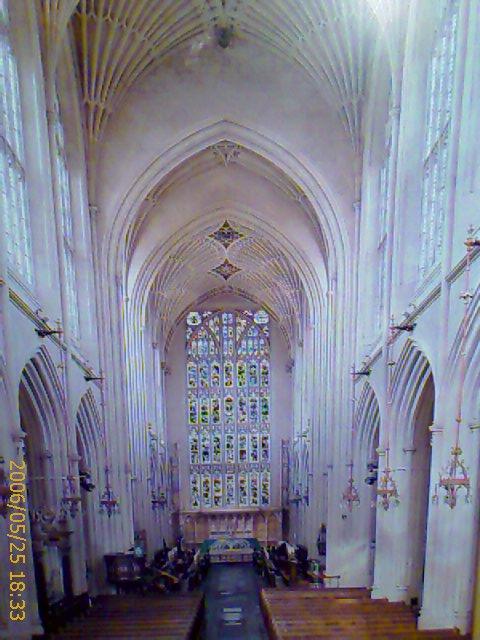
Thursday, May 25. Sitting at 6:37p inside the abbey waiting for the sung eucharist of Ascension Day. Not that I've gone catholic or anything...I want to experience a cathedral in the purpose it was built for.

The building is hushed, yet every sound is magnified in the vaulted space. The creak of a pew and the wooden boards beneath them. The jangle of keys. The elderly women's whispered agreements on where to sit. A cough. Shoes scuffing and heels slapping on the granite and marble tombstones that form the flooring. The sliding shush of fabric as a jacket is removed.

The clear strains of yet another piper in the courtyard drift in through the open side doors at the back of the church. Earlier I had walked the floor and read the tombstones--one of a mother and daughter who died 40 years apart, each aged in their 80s, in the 1800s--and heard the tune of "Somewhere Over the Rainbow" from the single flute.

The dark, wood pews are covered in a pad of red carpet, and kneeling cushions--blocks of red vinyl and fabric--hang on brass rings and hooks in front of us on the pews ahead.

The walls of the corridors that flank the abbey are lined from the floor to about 8 feet up with marble tomb markers. Elegant, elaborate, simple, carved, uncarved. No matter. Each one is a way to commemorate and notice that someone lived and died. Loved. Was loved. Lived, worked, sometimes served the community or a regiment, sometimes created something famous, sometimes did nothing more notable than be a beloved spouse or son or daughter.

The next 12 to 20 feet above rises with arched, stained glass depictions of biblical scenes--picture books put to glass. One window shows myriad coats of arms, and carvings of coats of arms decorate the junctions in the vaulted ceiling.

It is easy to feel somber in a place that is so redolent with death and reminders of the brevity of life. Yet each time the choir sings and the pipe organ plays during the service, the abbey seems to come alive from the inside out.

The deep bass vibrates through my feet in the floorboards. The midtones reverberate from the walls. The choir's clear notes slide up and over in rolls of music that lift to the rafters and fold back to us like audible light.

Gone are morbid thoughts of people long buried, with granite markers their only memory. In their place is a thrill of living, of breathing, of hearing song that flows out and returns with tenfold force. My hands and heart open in prayer, and the abbey sends it gloriously on.

Creamy Stone and Clotted Cream

Ate breakfast at the Y's cafeteria (more cereal and toast, but I could supplement with yogurt bought at the counter) while I re-input contacts after a last-ditch, hard-restart on Perry (my pocket PC) last night. I needed to return it to the proper default settings for use in the UK with Vodafone. What a pain in the bum to take care of this. I only hope I managed to record all the right info on paper so I can reinstate it. And that I can reinstall my important supplemental programs--Sudoku and my keyboard and mouse software.

My hunt for Internet access began at the library, where they're in the middle of a computer changeover, with many systems down. I got 15 minutes of visitor's access on one of the few computers that were functioning, but couldn't reinstall PC software (or even reply to email) because of administration limitations on the computers. I can tell this technological learning curve is going to be uphill a little longer.

Giving up on Perry's reset for a while, I walked around waiting for the free Bath walk to start at 10:30. Just when I got used to looking right first when crossing streets in London, I come here, which has lots of one-ways requiring left-hand attention. How do people know a street is one-way here, anyway? They all seem equally narrow and there are no one-way signs posted. Some streets have "no entry" painted on the asphalt, but not consistently. I'm on my toes at every intersection.


Near the abbey a fountain reads, "Water Is Best. Erected by the Bath Temperance Association, founded June 15th 1836, June 8th 1861." Subtle, weren't they?

I arrive at the abbey courtyard, which also fronts the Pump Room and Roman Bath entrances. A street piper plays in the square, locals talk to locals with "See ya, guv'nor" and "Hello, love," and tourists query the driver of Bath sightseeing bus. Bath is much quieter than London...I can record the piper but couldn't hear Big Ben above the traffic noise.


Enough people have congregated for the Bath walking tour that they split us into three groups of about 12. We have Myra and a trainee guide David. We started with the Abbey, which was built on the site of former churches by order of Bishop Oliver King. He had dreamt the church was to be decorated with Christ surrounded by a heavenly host and angels going up and down ladders to and from heaven. These are depicted in stone on the front of the church. One upside-down angel looks like he's falling, but he's the one climbing downward.


On either side of the entrance, a rebus of the bishop's name is carved in stone--a bishop's miter (Bishop), an olive tree (Oliver), and a crown (King). They say the average person couldn't read and needed pictures to help him get along, but I think it takes a lot of smarts to figure these things out--plus a healthy dose of pun to pull it all out.


We went past the new Bath Spa, which was supposed to open in 2001 and has been plagued with costly delays, including the use of a pool paint that wasn't waterproof! Halt construction, enter litigation, point fingers, find solutions, etc.

This is to be the first time Bath has had a public spa since the 1800s when Jane Austin lived here, so there's a lot of hoopla around it. There are signs that it may be opening soon at last (furniture was being delivered this morning), but the skyrocketing costs and endless delays are a sore point for many Brits. Most snipe that the spa is likely to be more for the wealthy set than anyone else. Pensioners (senior citizens) are supposed to get a price break.


Bath used to be walled in Roman times, and some parts of wall still exist. We wound around back alleys to pass the Royal Theater, where professional London troupes start their run for a week before they head off to the big city, then got a description of architecture by Wood the elder and Wood the younger.

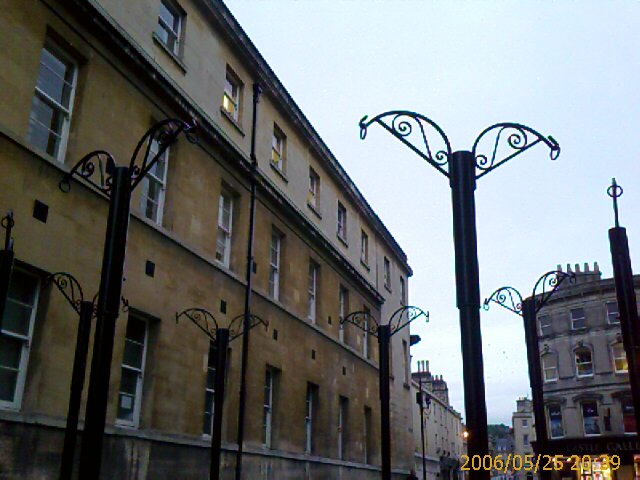
The elder Wood is the one who set up the Palladium [sp?] style of mathematical precision and Roman balance throughout Bath's architecture, and the younger followed on, only with less regimentation. Nearly every building in Bath looks the same thanks to these two, and to the use of the creamy yellow local stone.

Wood the elder was not particularly liked for his arrogance--he was only about 27 when he started rearranging Bath's layout to suit his vision--but he was listened to. He defined the look of Georgian architecture for Bath, insisting that the aristocracy follow his lead.


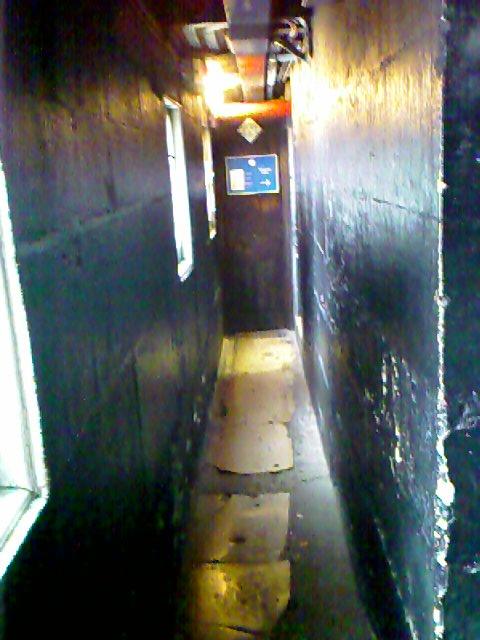
Myra explained that the buildings on Queen and Gay (a doctor) streets shows his style and his approach. It uses the best quarried local stone for the pristine front facade, yet uses inferior (lower from the quarry) rubble stone for the rest of the building behind the facade. These two photos show the front and back.

We also walked along roads and gravel paths mentioned in Jane Austen's Persuasion (which is set in Bath), and took in a brief history of the famous Royal Crescent and Royal Circus (circle), designed, some say, in homage to the moon (crescent) and sun (circle) just a few long blocks apart.

Napped at my room after the two-hour tour, then walked the short distance to Holburne Museum of Art, home of several Gainsboroughs and Turners and a small Wedgwood collection.

They also have an interesting exhibit celebrating the building of the Great Western Railway, which goes from London to Bristol in almost perfect level. The engineer/designer, Isambard Kingdom Brunel, cut new-fangled tunnels and channels and worked around geology in creative ways to keep the track flat the whole way.

The site of the Holburne estate, Syndey Park, was dissected for the rail by a channel with pedestrian walkways over it, and then given a promenade so strollers could watch the construction and enjoy the trains going by. I walked some of the promenade and imagined the workers and first train carriages rumbling by. That was nearly 200 years ago--the anniversary of Brunel's achievements. (Brunel also built the first ocean liner to go across the Atlantic in a week. That's being celebrated nearby at Bristol this year, too.)


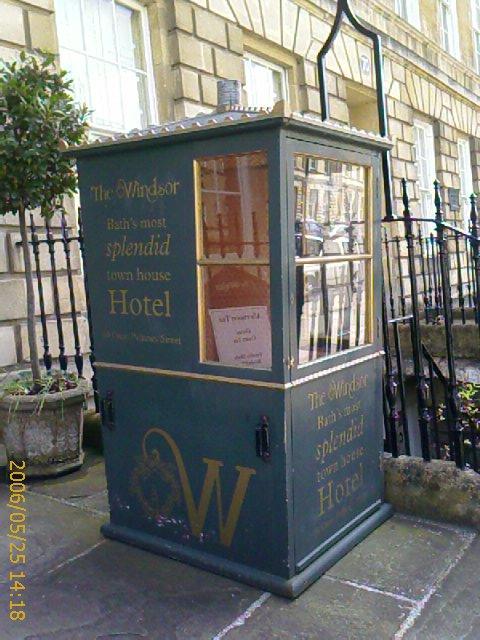
I was feeling peckish after so much walking, and had high tea at 4:15 at Windsor Hotel on the way back. In the front of their hotel, they have a sedan chair (litter) like the kind the rich folk hired to carry them all over this hilly town, and sometimes up and down stairs inside buildings, in the 1800s. Myra had told us about them. A local leader got the sedan runners, a rangy crew at best, to register and number their chairs, and taxis have done so ever since.

Whoever invented clotted cream had a good thing going. I plopped it generously on strawberry-jammed scones while sitting in a 19th-century Bath hotel, propped on the edge of a period rose-colored chair, leaning over an oval, brass claw-footed wooden coffee table. Its varnish is white in spots--heat wounds made during countless teas before me.

In between bites on my tuna sandwiches (I was allowed to order one flavor of sandwich from their menu and they brought me two of them--sheesh, who wants to eat two full tuna sandwiches in one sitting?) I pecked at Perry and updated my contacts list with 21st-century technology.

So weird, this juxtaposition of old and new, slow and fast. It's everywhere. At the Holburne, I had studied fastidious embroideries and miniature paintings that would have kept their creators busy for months. Not thirty minutes later, I watched boys playing football on the grass at Sydney Park. "Get the ball, don't waste time!" one of them yelled when the ball went out of bounds on their makeshift field.

Yet everywhere I go here, galleries and antique shops and streets are filled with examples of slow living, slow creation. Times when buildings took decades and centuries to erect, when a friend might wait 11 years for a portrait to be finished by Gainsborough, and when the idea of speeding at 45 miles an hour in a train smooth enough to drink coffee and write in (as Brunel predicted) was the glorious promise of the technological age.

"Don't waste time," said the boy of 10. Sad that one so young already thinks there's not enough time to go around. I walked by at my holiday leisure, no doubt a classic example of a time-waster, and feeling the old pull of that belief--that any hour not spent in complete industry, in busyness, in doing or creating or achieving or learning, is time that has been frittered. Debunking this belief is one of my purposes on this trip.

I stirred sugar and cream into a refill of tea and sipped it. An oak still takes 100 years to become 100 years old. Tea still takes 3 minutes to brew just right. Some things, thank god, can't be rushed.

Wednesday, May 24, 2006

It's Fun to Stay at the YYYY-MCA...

Packed up all my gear after my final cornflakes-and-toast breakfast at the Glynne Court Hotel and left my London digs at 10:30a or so, heading the wrong direction on the Tube--Tottenham Ct instead of Nottinghill. Too many Ts and Ns in those names. Got myself righted after three stops, then made my way to Paddington Station where I withdrew cash from the ATM, and took refuge--and snacks--in the first class lounge.


Time will tell whether having a first class Britrail pass was worth the additional expense. Certainly the larger windows in the first class cars enhanced the pleasure of the views.

The noon high-speed train pulled into Bath right on time at 1:30. I had no lodging waiting for me, and some time spent at the railroad station tourist information center came up with no openings at the nearest B&Bs or hostels for the 5 nights I needed. A music festival was starting this weekend, and many places were booked.

"Try the YMCA in the middle of town," said the clerk. "They're the biggest."


Strapping on my pack, I headed into town and stopped at Aimee's B&B a block from the station--it was available for 5 nights at £40/night for a single, but by then I'd called the YMCA and found they had 5 nights available for an average of £17 per night...plus the bonus of a central location and the opportunity to bunk with 13 other women in a dorm on the weekend because a single room wasn't available for all 5 nights. While the single room would be great for the first 3 days, I was looking forward to experiencing the energy of a group slumber party on Saturday.


After settling into my third-floor room at the Y, which has a wonderful view of the hills to the east of Bath, I wandered the main streets to get my bearings relative to the Abbey (primary landmark here) and was sucked into Minervas by the smell of handmade chocolates. This high-end, chocolates-only candy shop is named after the goddess of the original Roman Spa and Temple that defines Bath. It is run by Philippe, who owned a restaurant for twenty years. I bought 8 chocolates, one of them an unusual rose and violet creme, and asked for a dinner recommendation. He sent me to The White Hart--the chef there had once worked for him.

The White Hart is at the south end of town, just beyond the train station, in Widcombe, which is like a bedroom community of Bath. You have to get to it by walking through a tunnel at the train station where taxis wait under the elevated rail.


I left my order up to the recommendation of the server and took Spanish Treballano wine and an appetizer of rough pesto (whole roasted pine nuts, olive oil, grated parmesan, minced basil, salt, garlic) with warm crusty bread. My main course was a beheaded baked crusty sea bass with lime, ginger, and chilli (that's how they spell it here) butter with tomatoes, and mixed vegetables of snow peas and fine (thin) green beans.

They were completely booked for the night later, but I had been able to walk in at 6:00. The place did start filling up by the time I was done, and I skipped dessert because they needed my table. Besides, I had a Minerva's hazelnut creme or two waiting in my pack.


On the way back into town, I caught the evening's 8:00p Bizarre Bath comedy walk that had started a few minutes before I arrived. It's run every night by a very energetic improv guy dressed in a bright purple long coat and carrying bright purple balloons attached to a bright purple satchel. Alas, my camera fades the hue to blue tones; he was quite spectacular. He’s the guy on the left, spouting water.

The show was a Rick Steves must-do and indeed funny--lots of audience participation and jokes at our expense (there were only 9 of us foolish enough to huddle out there in the rain with umbrellas and raincoats), a few magic/illusion tricks, and very light amount of walking in the heart of the town. There was also the bit in which our guide explains that all non-tourists are supposed to show their savvy by hopping on one foot across a certain street like the locals. We all gamely took the opportunity to look totally ridiculous. The Dufflepuds of Narnia did it a lot better.

Things went slightly off track when we got to the Avon River, where our guide was to do a bizarre Houdini gag involving a white stuffed rabbit wrapped in chains and that didn't drown. The UK has been inundated with unusually torrential rains this month, and apparently the Avon River was too high to pull off the stunt. Our guide explained the gist of it to us, but it lost something in the translation.

We were stopped cold ten minutes later in the abbey courtyard. Throngs of people were pouring out of the abbey after an evening musical performance--one of many events in the International Music Festival and something that our guide hadn't expected.

Overrun with scores of black umbrellas, our flummoxed guide grunted, "This, my friends, is what is known as a complete cockup. A complete and utter cockup. If you'll all follow me, you'll get your £8 back and two free tickets to tomorrow's show."

He had been so full of gags all evening that most of us thought he was joking again, but he marched us all to our starting point, gave us our money back, and handed out free tickets. Boom. Done. Over just like that.

I was just as glad to have the program stop an hour early. The jokes were funny, but things like this are much more fun with a larger group and a companion. I didn't realize until now that experiencing comedy alone or among a very small group of strangers isn't so easy. No wonder TV shows use laugh tracks.

Tuesday, May 23, 2006

Stairs and Alleys, Byways and Hidden Crypts

As a many-time visitor to London, Mom ("Mum" in the UK) has long since abandoned the Tube in favor of walking and the occasional taxi. After spending four full days getting around London on foot, I tend to agree...although I still prefer the Tube over taxi for longer distances when I need to travel on a schedule.

I spent these four days amid intermittent bouts of steady rain and blustery winds climbing over 1000 steps at St. Paul's to the highest gallery you can go to, riding the London Eye at the south of the Thames, and meandering through alleys and back roads of London by following a couple of published walks I'd found in a book called Secret London, as well as a guided tour that started in Covent Garden.

Doing St Paul's and the London Eye on the same day has a lot to recommend it--I got opposing views of the city, with the Eye like a silver ring standing on edge in the distance from the top of St. Paul's, and St. Paul's dome a tiny cap among square roofs from the top of the Eye.

St. Paul's lives up to its reputation for gilded beauty and art. Vaulted ceilings painted and tiled in saints and apostles and bible stories told in golds, deep reds, blues, and greens. Alas, no photos are allowed inside to protect the art and the reverence of the place--it is still a functioning church.

I did snap a few shots of the less-public innards as I climbed the wooden spiraling stairs to the Whispering Gallery inside the dome, and then wound my way up the second and third level of spirals (stone steps and metal staircase, respectively) to the exterior galleries for an overlook of the city. People used to be able to climb a ladder to the highest point of the church, but it's been closed for about 20 years according to one of the gallery attendants.


Outside on the galleries it was very windy--coats and hair and camera straps flapped around everyone. From the Golden Gallery, the section just above the cap of the dome, I took a photo down over the dome (below left) to the same spot from which I'd taken a photo of the dome from the ground (below right). The tall fir tree in the center of both images is the same.


I got a kick out of the simple graffiti on several walls of St Paul's interior corridors. Some that are carved into the stones date back to the 1700s and are only initials, while others, written and dated a month ago in pen, include Hotmail e-mail addresses. The desire to leave a mark that reminds others "I was here, please remember," seems universal across the ages.

I ate a sandwich lunch at the cathedral's Café in the Crypt (yes, the real crypt in the basement) among tombs and statues and memorials of people long dead. Tombstones had been stuck to the walls and laid on the floor as pavers. We tourists were shooed out from a small sideroom, the chapel in the crypt, at 1:30 so the room could be prepped for a wedding. A bit creepy if you ask me.
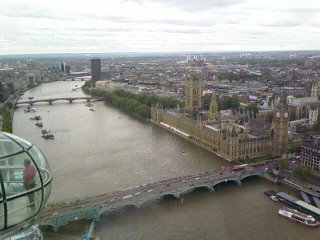
The London Eye was worth the walk from St Paul's (about 30 minutes), the price of admission (£9), and the bit of a wait (only 15 minutes this time of day). It's more like a people mover than a ferris wheel, taking 30 minutes to complete a circuit in the pods. I could barely tell we were moving, which was nice because it gives lots of chances for photos as we went round.

At the end of the circuit, the speaker system announces that a photo is about to be taken, Disneyland style, of everyone in the pod and instructs those who want to be in the photo to collect at a certain part of the pod, according to the NW, NE, SE etc. labels inside. The instructions were a bit confusing, and a large family gathered themselves together, faced the Thames, and grinned at what they thought was a camera inside the pod...just as I spotted the flash of the camera that was mounted behind us, on the Eye itself, taking a photo of what seemed to be an empty glass cabin.

I walked home that night from the Eye via Shaftsbury, Charing Cross, and Oxford St, coming upon two groups of Native American street musicians on side streets off of Oxford. They seemed like anachronisms in these London courtyards--dressed in leather-fringed, feather-headressed regalia and dancing to deerhide drums and wooden flutes and the hooyahiyaya rhythms that I usually hear in the Pacific Northwest. CDs for sale, of course.

The next morning, Sunday, Norman and Jean and I had planned to toodle around Islington, London. Rain delayed our start, so Norman taught me map and compass skills at their dining room table. They'll come in handy on the rest of the trip, especially in Dartmoor and Devon areaseas (if I get the and on the C2C walk.

We did troop off into town in the rain to take care of some shopping. I bought a pair of trekking poles in Tchibo's, and Jean and I each bought a new celery-green rain coat there. We looked like a pair of Kermit the Frogs.

After a lunch with Jean and Norman of smoked salmon, cheese, bread, and tea, the rain let up enough for Norman and me to head out toward Stoke Newington area.

The walk went through neighborhoods of Edwardian and Victorian era homes, some also late 1700s. All tidy and in rows. Some very posh areas per Norman. Elsewhere in town, Daniel Defoe, of Robinson Crusoe fame, had lived; we had a drink at the pub of his name.

The highlight of this walk for me was an out-of-the-way local cemetery--can't remember the name of it right now, Al-something. It was overgrown in a way that was both creepy and compelling.

Walkways ran through the area as if they were set for a forest stroll, but among the trees and tangles of knee-high shrubs stood hundreds of tombstones--many of them tilted and weathered and clustered and broken and moss-covered. An old stone chapel, once bright with stained glass windows and including a covered area that enabled mourners to dismount from their carriages out of the rain, was a decaying ruin.


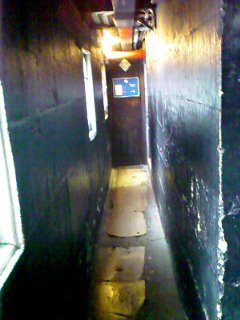
My City walks on Monday started at St Paul's around 10:30a, with a pub lunch break at The Ship on the way. Today was a workday. Everyone in this area was dressed in black suits and black suit-skirts for the office. The famous beige-, red-and-black Burberry plaid was prominent in scarves, raincoats, and brollies (umbrellas). I was following a couple of walks in the Secret London book, which offered numerous opportunities to duck into alleyways and corridors, some of them just wide enough for two people.

Alleys back home aren't generally considered safe or welcome places, and I had to pluck up the nerve to venture into them at first. However, alleys here are clear of debris and rubbish bins and the smell of urine, and are used regularly by everyone as shortcuts through town or by smokers chased out of their offices by non-smoking laws. Bummer in all this rain.

Truly off the beaten path, I never felt unsafe, although the couple of twisty dark corridors that lead to The Mitre, "London's most hard to find pub" (says Secret London), felt like they were straight out of a Dickens novel, or perhaps the inspiration for Nocturn Alley in the HP books.

A warren of alleyways, curving side streets, and foot passages often led me to some very interesting pockets of shops, pubs, or public art. One street that housed the George and Vulture pub also had a high-end jeweler and a wall-mounted medallion marking the site of London's first coffee house in 1652 (no, not a Starbucks).

Through another, I came upon the house where Samuel Johnson, dictionary writer extraordinaire, lived for ten years while he wrote that famous 14,000-word tome. The house tour wasn't worth a £5 entry fee, but it was interesting in its way. It was four stories of mostly empty rooms and numerous engravings/portraits of Johnson's contemporaries on the wall. It did have a clever way of using hinged walls with doors to separate three rooms or make one great room.
I often trod on cobblestones or pavers and passed new or remodeling construction that had excavated through layers of brick and stone roads. Many former church gardens and cemeteries, with several of their erstwhile tombstones propped against walls, have become pocket parks where office workers come out for a cigarette or lunch.

I followed the trail to the ruins of a Roman crypt that the city planners had built around, in situ and surrounded by glass, as part of the bottom floor of an office building at Fleet street (former publishing mecca for newspapers).
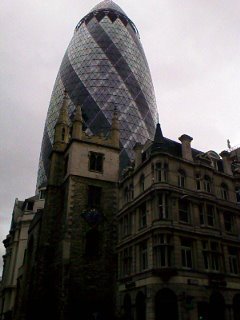
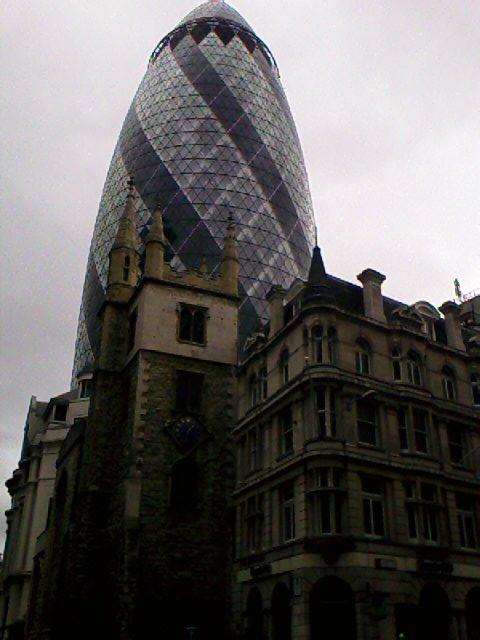
The contrast of old and new in London is extreme, especially in The City area. At first I found it too jolting to take; after a while, it grew on me enough to appreciate the efforts that Londoners are making to move ahead without also completely sacrificing the awareness of their ancient roots.


Having toured the city on my own, it was time for an official guided walk. The only one available to my schedule was "Behind Closed Doors" with Brian as guide. Starting at Covent Garden, we dropped in on the new Opera House, all glass and iron work and stone steps and shiny escalators.

Our next stop, twenty minutes at the Royal College of Surgeons was particularly engaging for the scientific or macabre minded (or, like mine, both).

This place contains the remaining part of an original collection by the Hunting (Hunter?) brothers, who spent their lifetimes as surgeons and medical, uh, explorers of the 1800s, collecting body parts and bones of people and animals and learning and lecturing from their findings. The upstairs of the college, recently opened to the public at no charge (but alas, like most museums, also closed to photos), is lined with glass displays explaining the often ghastly means and tools of medicine and surgery in those days, the development of anesthesia and antiseptics, and the stories behind some of the medical miracles, disasters, and oddities the men collected, such as the umber-colored skeleton of one Victorian fellow who stood over seven feet tall, and a tumor the size of a basketball that had been successfully excised from a man's neck.

A row of what looked like modern art paintings in red on dark backgrounds turned out to be human nervous systems laid out carefully onto boards for study. It was like a cross between a DaVinci study and a plate from Grays Anatomy.

The rest of the space was a biology lab on steroids. Medical students sat with sketchbooks in front of shelf after shelf of specimens marinated in formaldehyde or encased in resins. Biology samples included cross-sections of bones, muscles, rooster heads, tumors, bugs, and skulls. Up, down, and all around, room by room of them, stacked above the cases, and on glass shelves.

We also visited St. Clemens church, where many of the Royal Air Force and other military forces are honored. The floor is paved in stone and metal plaques commemorating many military feats in the UK and abroad. Brian especially pointed out the medallion for the squadron that helped break up German dams during WWII in order to stop the Germans from creating a nuclear bomb before the U.S. The story is covered in a great movie called Dambusters--worth looking for at your local vid store or ordering from NetFlicks.

The last stop, the Royal Courts of Justice, was a highly secured site (metal detectors and bag searches), beautifully appointed in marble walls and arches, mosaic floors. It had a spot set aside for the history of judicial costume collection. I never realized how much the style of robes told about a person's job and stature in the legal system.

I hurried off to meet Kim, a friend of Leigh's, for lunch in the cafeteria of the Home Office, a centerpiece of UK government near Parliament. Entry was performed via a pass at the front desk, then a moment or two spent in one of the glass cylinder security pods that everyone uses each time they enter or exit the rest of the complex.

The cylinders are glass floor to ceiling and are barely big enough for one person to stand in. A card key opens one side, you step to a green circle on the floor, the glass door slides around to close behind you, you pause about 3 seconds in the pod, and a second door in front slides around to let you out. I felt a bit like one of the Surgeon's College specimens on display, or that I was about to be hit with a laser and beamed as particles to the other side of the planet.

The Home Office has colored glass panels along the roof line; the sunlight through them made an interesting Mondrian-like pattern on the sidewalk.

I made a failed attempt to record Big Ben's 3 p.m. bells--too much street noise to capture it well--and decided to skip a repeat visit to Westminster.


Instead, I walked from Westminster to Kensington via the south edge of St James Park, round Buckingham Palace along Constitution road, then through back-neighborhood roads and mews west of the Buck House. I came upon and meandered through Harrods a bit (the four floors of Egyptian-décor elevators are like something out of a Disneyland ride). Tired feet encouraged me to Tube back to the hotel.

Dinner was local--Abu Ali (Lebanese) restaurant off of Edgeware road. Mint tea (a Lipton teabag with a handful of fresh mint steeping in hot water); a salad chop of lettuce, tomato, peppers, cucumbers, and crunchy fried Lebanese bread as crouton in olive oil and pepper; and lamb chunks and more crunchy Lebanese bread swimming in yogurt and butter--a gyros in a soup bowl. Hot (temperature), tangy (yogurt), crunchy (bread), meaty (lamb), yummy, and filling.

I spent meal time naming my London photos, then went to an Internet cafe to upload them to my online folder and check e-mail. Lovely to use e-mail to stay in touch with folks, and to know I've got friends watching for word from me and sending good thoughts of safety and supply throughout my stay.

(P.S. Thanks to those of you who have left comments on my blog and/or have e-mailed to me. I love hearing from you all!)



Friday, May 19, 2006

Fur on the Menu and Smoke from My Nose

Maryleborne, the area of London where I'm staying, is like a mishmash of the Middle East, but without the civil strife and dusty streets. Store fronts, banks, restaurants have signage in Arabic and English. Fruit and grocery markets, Internet cafes, and local clothing stores are run by people of Iranian, Turkish, or similar origins. Restaurants come in Lebanese, Armenian, Arabian, Indian, and other flavors. Some of the women walk the sidewalks in robes and veils, but most are in modern dress.

Today has been a walking day and preparation day. I explored the Maryleborne area, then wandered along New Bond, Regents streets into Leister Square, where I bought tix to Smaller, a three-woman performance tonight at the Lyric Theater, fourth row £25. Bought a Vodafone SIM card for my phone and got it set up, and stumbled onto Longacre St, home of the famous Stamfords map store. I dallied there for an hour and bought my Coast2Coast walking maps and a few for Dartmoor and Cornwall area.

Taking dinner at the Souk Restaurant (Moroccan) outside Leicester Square by Mousetrap's theatre turned out to be an adventure. It's a dimly lit place, with sharp incense burning and two rooms--one at the street front and one a bit deeper in. The tables are large silver trays set on stands at knee height (read: potentially tippy and awkward to negotiate) and surrounded by cushions and low poofs to sit on. Each table is set with a large bottle of water and two glasses and candle. Colorful rugs overlap to cover the floor, sometimes bunching up to catch an unawares foot. Moroccan music plays over a speaker system.

The hostess led me to the back corner, where five other patrons were seated--two women drinking wine and just digging into their food, and three middle-aged blokes in a corner who were just ready to order.

The space was crowded with cushions and tables, and I edged in beside my table to flop with little grace onto a booth-like row of cushions. They were draped in slip covers that needed constant adjusting.

The menu here has a goatskin cover that still wears its fur. I didn't know whether to pet it or read it. I opted for both. For supper, I chose a stew of lamb, prunes (finding out the yikes-bite-too-hard-way that they're unpitted), golden raisins, apples, and almonds served with couscous and a huge silver pot of mint tea. During the meal, I eavesdropped on the three men, who swapped celery and prunes from each others' chicken and lamb plates, and bantered about women, food, grade school experiences, and actors.

Halfway through my meal, the cook came into our little alcove on a mission to get through the door that was virtually inaccessible for the cushions and tables clustered here. With a long-legged reach, sneakered feet, and a "'Scuse me, 'scuse me, sorry" he stepped broadly over the cushions and nearly on top of one of the nearest of the three men, opened the door, and descended into a basement. A few minutes later, he emerged with six large, plastic-wrapped styro-trays of meat stacked under his right arm and clambored his way back over the cushions and guests, again muttering, "'Scuse me, 'scuse me, sorry." John Cleese in Fawlty Towers couldn't have done it better.

As I paid my bill, a two-foot tall glass unit arrived at the men's table nearby, smoking from the top and snaking a 3-foot long tube.

"What is that?" I asked, leaning with interest as the one called Steve, whom the cook had climbed over, pulled the ceramic end of the tubing toward himself.

"A shisha pipe," he said in a difficult to follow Irish-based accent. "Also called a hubble bubble."

A hubble bubble? Surely I hadn't heard that right. Images of the Caterpillar from Alice in Wonderland came to mind. "How does it work?"

He pointed to the tower of glass and its various bowls and bulges. "Not sure, really. There's water at the bottom here, and it's drawn up as steam through here, where the tobacco is--it's a resin, actually, not like a cigarette tobacco--and the top here is very hot--don't touch that. It's glowing coals, that is." He put his hand above it, and I did the same to feel the heat of the burning ring at the top.

"And how do you do it?"

"Like that bloke in America, Bill Clinton," Steve joked. "No, he didn't inhale, did he?" He offered me a puff, and I surprised myself by saying, "Yes, thanks, but after you've tried it first. You ordered it. Show me."

He took a deep inhale. "Tastes like bubblegum."

"Yeah, right," we all laughed.

Another fella tried a puff and put the tube from his mouth with a grimace. "Foul."

I took an inhale deep enough to make the pipe gurgle from the base. This drew praise from the others. "You made it bubble. That's good."

The flavor was slightly sweet, not tobacco-ey as I expected. Yes, and slightly like bubblegum, or, as Steve pronounced it, "booblegoom." I found out later from Norman that the tobacco resin is soaked in honey and something else I can't remember. I'd already had a very sweet meal, so I didn't taste as much as I might have from the pipe, but smoke blew out of my nose as if I were a baby dragon.

They offered me some more ("Oh, you know you want to" said the one who had proclaimed the stuff foul), but as I was already running late for the theater in waiting for my bill to come, I declined with thanks. The tobacco's sweet flavor recurred several times on my way to the performance, accompanied by a hint of headiness. Such is the lightweight that I am with this kind of stuff, even after a full meal.

Thursday, May 18, 2006

Landing London Among Friends

Today is May 29, a bank holiday, and I am sitting at a small table in my room at the Highridge B&B in Farmborough, taking the first opportunity to plug into keyboard and mouse since I arrived in the UK. The tablecloth is one of those vinyl jobs, printed in an orange weave pattern made to look like fabric. Its slick surface works great for the mouse.

Let me back up a bit. It's been nearly 15 days since I landed in London and spent my first day with Norman and Jean, friends of my mom's who live in Islington, a part of north London, and with Sara, a colleague from Seattle who lives in Maryleborne, in the heart of London.

Norman graciously picked me up at the airport for my morning flight, and I experienced the heartening comfort of coming out of Customs to spot, among a phalanx of strangers lining the roped corridor of arrivals, a photo-familiar face holding up a sheet of paper with my name on it. A hug and a double-check of my identity against a photo I'd sent Norman ("Right, then, it's you") we drove the hour or so to their home, where Norman fed me tea, helped review my general London plan and lodging options, and gave me the chance to shower after the trip in from Boston.

While Jean was at work, Norman and I walked Parliament Hill, which offers one of the best viewpoints over London, as well as a refreshment break at the cafe next to Kenwood Estate at the top of the hill. Norman later drove me to Sara's,who lives just north of the Marble Arch tube stop. I stayed at her gorgeous flat that evening, and the next morning found a bedsit (hotel) just a few blocks down the road on Great Cumberland.


It's the Glynne Court Hotel, with a single room on the third floor, the stairs barely wide enough for me and my pack to be lugged up beside me. At only £35 per night, this was a bargain.