Tuesday, May 23, 2006

Stairs and Alleys, Byways and Hidden Crypts

As a many-time visitor to London, Mom ("Mum" in the UK) has long since abandoned the Tube in favor of walking and the occasional taxi. After spending four full days getting around London on foot, I tend to agree...although I still prefer the Tube over taxi for longer distances when I need to travel on a schedule.

I spent these four days amid intermittent bouts of steady rain and blustery winds climbing over 1000 steps at St. Paul's to the highest gallery you can go to, riding the London Eye at the south of the Thames, and meandering through alleys and back roads of London by following a couple of published walks I'd found in a book called Secret London, as well as a guided tour that started in Covent Garden.

Doing St Paul's and the London Eye on the same day has a lot to recommend it--I got opposing views of the city, with the Eye like a silver ring standing on edge in the distance from the top of St. Paul's, and St. Paul's dome a tiny cap among square roofs from the top of the Eye.

St. Paul's lives up to its reputation for gilded beauty and art. Vaulted ceilings painted and tiled in saints and apostles and bible stories told in golds, deep reds, blues, and greens. Alas, no photos are allowed inside to protect the art and the reverence of the place--it is still a functioning church.

I did snap a few shots of the less-public innards as I climbed the wooden spiraling stairs to the Whispering Gallery inside the dome, and then wound my way up the second and third level of spirals (stone steps and metal staircase, respectively) to the exterior galleries for an overlook of the city. People used to be able to climb a ladder to the highest point of the church, but it's been closed for about 20 years according to one of the gallery attendants.


Outside on the galleries it was very windy--coats and hair and camera straps flapped around everyone. From the Golden Gallery, the section just above the cap of the dome, I took a photo down over the dome (below left) to the same spot from which I'd taken a photo of the dome from the ground (below right). The tall fir tree in the center of both images is the same.


I got a kick out of the simple graffiti on several walls of St Paul's interior corridors. Some that are carved into the stones date back to the 1700s and are only initials, while others, written and dated a month ago in pen, include Hotmail e-mail addresses. The desire to leave a mark that reminds others "I was here, please remember," seems universal across the ages.

I ate a sandwich lunch at the cathedral's Café in the Crypt (yes, the real crypt in the basement) among tombs and statues and memorials of people long dead. Tombstones had been stuck to the walls and laid on the floor as pavers. We tourists were shooed out from a small sideroom, the chapel in the crypt, at 1:30 so the room could be prepped for a wedding. A bit creepy if you ask me.

The London Eye was worth the walk from St Paul's (about 30 minutes), the price of admission (£9), and the bit of a wait (only 15 minutes this time of day). It's more like a people mover than a ferris wheel, taking 30 minutes to complete a circuit in the pods. I could barely tell we were moving, which was nice because it gives lots of chances for photos as we went round.

At the end of the circuit, the speaker system announces that a photo is about to be taken, Disneyland style, of everyone in the pod and instructs those who want to be in the photo to collect at a certain part of the pod, according to the NW, NE, SE etc. labels inside. The instructions were a bit confusing, and a large family gathered themselves together, faced the Thames, and grinned at what they thought was a camera inside the pod...just as I spotted the flash of the camera that was mounted behind us, on the Eye itself, taking a photo of what seemed to be an empty glass cabin.

I walked home that night from the Eye via Shaftsbury, Charing Cross, and Oxford St, coming upon two groups of Native American street musicians on side streets off of Oxford. They seemed like anachronisms in these London courtyards--dressed in leather-fringed, feather-headressed regalia and dancing to deerhide drums and wooden flutes and the hooyahiyaya rhythms that I usually hear in the Pacific Northwest. CDs for sale, of course.

The next morning, Sunday, Norman and Jean and I had planned to toodle around Islington, London. Rain delayed our start, so Norman taught me map and compass skills at their dining room table. They'll come in handy on the rest of the trip, especially in Dartmoor and Devon areaseas (if I get the and on the C2C walk.

We did troop off into town in the rain to take care of some shopping. I bought a pair of trekking poles in Tchibo's, and Jean and I each bought a new celery-green rain coat there. We looked like a pair of Kermit the Frogs.

After a lunch with Jean and Norman of smoked salmon, cheese, bread, and tea, the rain let up enough for Norman and me to head out toward Stoke Newington area.

The walk went through neighborhoods of Edwardian and Victorian era homes, some also late 1700s. All tidy and in rows. Some very posh areas per Norman. Elsewhere in town, Daniel Defoe, of Robinson Crusoe fame, had lived; we had a drink at the pub of his name.

The highlight of this walk for me was an out-of-the-way local cemetery--can't remember the name of it right now, Al-something. It was overgrown in a way that was both creepy and compelling.

Walkways ran through the area as if they were set for a forest stroll, but among the trees and tangles of knee-high shrubs stood hundreds of tombstones--many of them tilted and weathered and clustered and broken and moss-covered. An old stone chapel, once bright with stained glass windows and including a covered area that enabled mourners to dismount from their carriages out of the rain, was a decaying ruin.


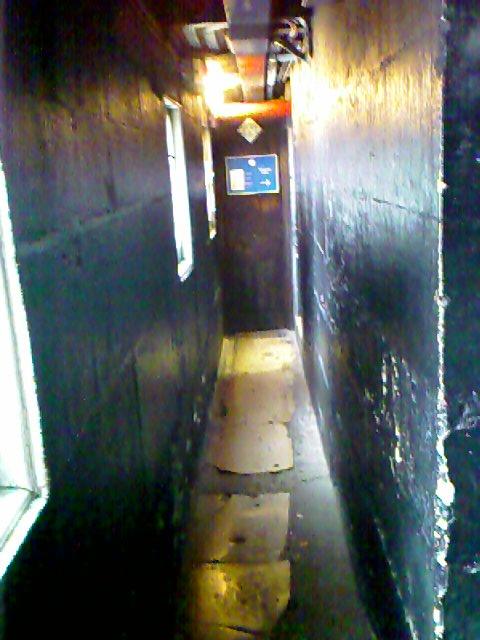
My City walks on Monday started at St Paul's around 10:30a, with a pub lunch break at The Ship on the way. Today was a workday. Everyone in this area was dressed in black suits and black suit-skirts for the office. The famous beige-, red-and-black Burberry plaid was prominent in scarves, raincoats, and brollies (umbrellas). I was following a couple of walks in the Secret London book, which offered numerous opportunities to duck into alleyways and corridors, some of them just wide enough for two people.

Alleys back home aren't generally considered safe or welcome places, and I had to pluck up the nerve to venture into them at first. However, alleys here are clear of debris and rubbish bins and the smell of urine, and are used regularly by everyone as shortcuts through town or by smokers chased out of their offices by non-smoking laws. Bummer in all this rain.

Truly off the beaten path, I never felt unsafe, although the couple of twisty dark corridors that lead to The Mitre, "London's most hard to find pub" (says Secret London), felt like they were straight out of a Dickens novel, or perhaps the inspiration for Nocturn Alley in the HP books.

A warren of alleyways, curving side streets, and foot passages often led me to some very interesting pockets of shops, pubs, or public art. One street that housed the George and Vulture pub also had a high-end jeweler and a wall-mounted medallion marking the site of London's first coffee house in 1652 (no, not a Starbucks).

Through another, I came upon the house where Samuel Johnson, dictionary writer extraordinaire, lived for ten years while he wrote that famous 14,000-word tome. The house tour wasn't worth a £5 entry fee, but it was interesting in its way. It was four stories of mostly empty rooms and numerous engravings/portraits of Johnson's contemporaries on the wall. It did have a clever way of using hinged walls with doors to separate three rooms or make one great room.
I often trod on cobblestones or pavers and passed new or remodeling construction that had excavated through layers of brick and stone roads. Many former church gardens and cemeteries, with several of their erstwhile tombstones propped against walls, have become pocket parks where office workers come out for a cigarette or lunch.

I followed the trail to the ruins of a Roman crypt that the city planners had built around, in situ and surrounded by glass, as part of the bottom floor of an office building at Fleet street (former publishing mecca for newspapers).
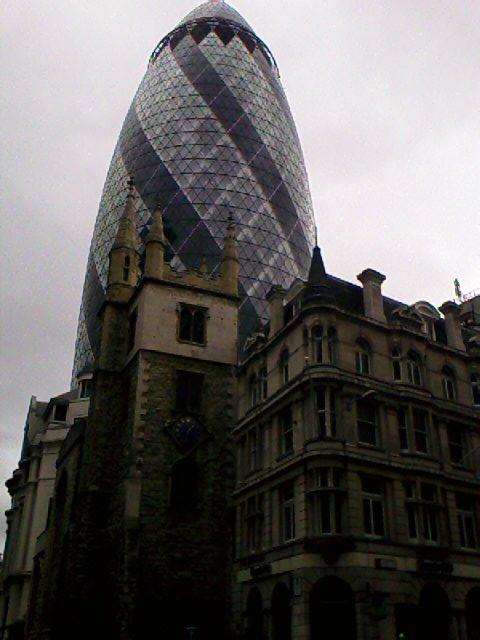
The contrast of old and new in London is extreme, especially in The City area. At first I found it too jolting to take; after a while, it grew on me enough to appreciate the efforts that Londoners are making to move ahead without also completely sacrificing the awareness of their ancient roots.


Having toured the city on my own, it was time for an official guided walk. The only one available to my schedule was "Behind Closed Doors" with Brian as guide. Starting at Covent Garden, we dropped in on the new Opera House, all glass and iron work and stone steps and shiny escalators.

Our next stop, twenty minutes at the Royal College of Surgeons was particularly engaging for the scientific or macabre minded (or, like mine, both).

This place contains the remaining part of an original collection by the Hunting (Hunter?) brothers, who spent their lifetimes as surgeons and medical, uh, explorers of the 1800s, collecting body parts and bones of people and animals and learning and lecturing from their findings. The upstairs of the college, recently opened to the public at no charge (but alas, like most museums, also closed to photos), is lined with glass displays explaining the often ghastly means and tools of medicine and surgery in those days, the development of anesthesia and antiseptics, and the stories behind some of the medical miracles, disasters, and oddities the men collected, such as the umber-colored skeleton of one Victorian fellow who stood over seven feet tall, and a tumor the size of a basketball that had been successfully excised from a man's neck.

A row of what looked like modern art paintings in red on dark backgrounds turned out to be human nervous systems laid out carefully onto boards for study. It was like a cross between a DaVinci study and a plate from Grays Anatomy.

The rest of the space was a biology lab on steroids. Medical students sat with sketchbooks in front of shelf after shelf of specimens marinated in formaldehyde or encased in resins. Biology samples included cross-sections of bones, muscles, rooster heads, tumors, bugs, and skulls. Up, down, and all around, room by room of them, stacked above the cases, and on glass shelves.

We also visited St. Clemens church, where many of the Royal Air Force and other military forces are honored. The floor is paved in stone and metal plaques commemorating many military feats in the UK and abroad. Brian especially pointed out the medallion for the squadron that helped break up German dams during WWII in order to stop the Germans from creating a nuclear bomb before the U.S. The story is covered in a great movie called Dambusters--worth looking for at your local vid store or ordering from NetFlicks.

The last stop, the Royal Courts of Justice, was a highly secured site (metal detectors and bag searches), beautifully appointed in marble walls and arches, mosaic floors. It had a spot set aside for the history of judicial costume collection. I never realized how much the style of robes told about a person's job and stature in the legal system.

I hurried off to meet Kim, a friend of Leigh's, for lunch in the cafeteria of the Home Office, a centerpiece of UK government near Parliament. Entry was performed via a pass at the front desk, then a moment or two spent in one of the glass cylinder security pods that everyone uses each time they enter or exit the rest of the complex.

The cylinders are glass floor to ceiling and are barely big enough for one person to stand in. A card key opens one side, you step to a green circle on the floor, the glass door slides around to close behind you, you pause about 3 seconds in the pod, and a second door in front slides around to let you out. I felt a bit like one of the Surgeon's College specimens on display, or that I was about to be hit with a laser and beamed as particles to the other side of the planet.

The Home Office has colored glass panels along the roof line; the sunlight through them made an interesting Mondrian-like pattern on the sidewalk.

I made a failed attempt to record Big Ben's 3 p.m. bells--too much street noise to capture it well--and decided to skip a repeat visit to Westminster.


Instead, I walked from Westminster to Kensington via the south edge of St James Park, round Buckingham Palace along Constitution road, then through back-neighborhood roads and mews west of the Buck House. I came upon and meandered through Harrods a bit (the four floors of Egyptian-décor elevators are like something out of a Disneyland ride). Tired feet encouraged me to Tube back to the hotel.

Dinner was local--Abu Ali (Lebanese) restaurant off of Edgeware road. Mint tea (a Lipton teabag with a handful of fresh mint steeping in hot water); a salad chop of lettuce, tomato, peppers, cucumbers, and crunchy fried Lebanese bread as crouton in olive oil and pepper; and lamb chunks and more crunchy Lebanese bread swimming in yogurt and butter--a gyros in a soup bowl. Hot (temperature), tangy (yogurt), crunchy (bread), meaty (lamb), yummy, and filling.

I spent meal time naming my London photos, then went to an Internet cafe to upload them to my online folder and check e-mail. Lovely to use e-mail to stay in touch with folks, and to know I've got friends watching for word from me and sending good thoughts of safety and supply throughout my stay.

(P.S. Thanks to those of you who have left comments on my blog and/or have e-mailed to me. I love hearing from you all!)


Friday, May 19, 2006

Fur on the Menu and Smoke from My Nose

Maryleborne, the area of London where I'm staying, is like a mishmash of the Middle East, but without the civil strife and dusty streets. Store fronts, banks, restaurants have signage in Arabic and English. Fruit and grocery markets, Internet cafes, and local clothing stores are run by people of Iranian, Turkish, or similar origins. Restaurants come in Lebanese, Armenian, Arabian, Indian, and other flavors. Some of the women walk the sidewalks in robes and veils, but most are in modern dress.

Today has been a walking day and preparation day. I explored the Maryleborne area, then wandered along New Bond, Regents streets into Leister Square, where I bought tix to Smaller, a three-woman performance tonight at the Lyric Theater, fourth row £25. Bought a Vodafone SIM card for my phone and got it set up, and stumbled onto Longacre St, home of the famous Stamfords map store. I dallied there for an hour and bought my Coast2Coast walking maps and a few for Dartmoor and Cornwall area.

Taking dinner at the Souk Restaurant (Moroccan) outside Leicester Square by Mousetrap's theatre turned out to be an adventure. It's a dimly lit place, with sharp incense burning and two rooms--one at the street front and one a bit deeper in. The tables are large silver trays set on stands at knee height (read: potentially tippy and awkward to negotiate) and surrounded by cushions and low poofs to sit on. Each table is set with a large bottle of water and two glasses and candle. Colorful rugs overlap to cover the floor, sometimes bunching up to catch an unawares foot. Moroccan music plays over a speaker system.

The hostess led me to the back corner, where five other patrons were seated--two women drinking wine and just digging into their food, and three middle-aged blokes in a corner who were just ready to order.

The space was crowded with cushions and tables, and I edged in beside my table to flop with little grace onto a booth-like row of cushions. They were draped in slip covers that needed constant adjusting.

The menu here has a goatskin cover that still wears its fur. I didn't know whether to pet it or read it. I opted for both. For supper, I chose a stew of lamb, prunes (finding out the yikes-bite-too-hard-way that they're unpitted), golden raisins, apples, and almonds served with couscous and a huge silver pot of mint tea. During the meal, I eavesdropped on the three men, who swapped celery and prunes from each others' chicken and lamb plates, and bantered about women, food, grade school experiences, and actors.

Halfway through my meal, the cook came into our little alcove on a mission to get through the door that was virtually inaccessible for the cushions and tables clustered here. With a long-legged reach, sneakered feet, and a "'Scuse me, 'scuse me, sorry" he stepped broadly over the cushions and nearly on top of one of the nearest of the three men, opened the door, and descended into a basement. A few minutes later, he emerged with six large, plastic-wrapped styro-trays of meat stacked under his right arm and clambored his way back over the cushions and guests, again muttering, "'Scuse me, 'scuse me, sorry." John Cleese in Fawlty Towers couldn't have done it better.

As I paid my bill, a two-foot tall glass unit arrived at the men's table nearby, smoking from the top and snaking a 3-foot long tube.

"What is that?" I asked, leaning with interest as the one called Steve, whom the cook had climbed over, pulled the ceramic end of the tubing toward himself.

"A shisha pipe," he said in a difficult to follow Irish-based accent. "Also called a hubble bubble."

A hubble bubble? Surely I hadn't heard that right. Images of the Caterpillar from Alice in Wonderland came to mind. "How does it work?"

He pointed to the tower of glass and its various bowls and bulges. "Not sure, really. There's water at the bottom here, and it's drawn up as steam through here, where the tobacco is--it's a resin, actually, not like a cigarette tobacco--and the top here is very hot--don't touch that. It's glowing coals, that is." He put his hand above it, and I did the same to feel the heat of the burning ring at the top.

"And how do you do it?"

"Like that bloke in America, Bill Clinton," Steve joked. "No, he didn't inhale, did he?" He offered me a puff, and I surprised myself by saying, "Yes, thanks, but after you've tried it first. You ordered it. Show me."

He took a deep inhale. "Tastes like bubblegum."

"Yeah, right," we all laughed.

Another fella tried a puff and put the tube from his mouth with a grimace. "Foul."

I took an inhale deep enough to make the pipe gurgle from the base. This drew praise from the others. "You made it bubble. That's good."

The flavor was slightly sweet, not tobacco-ey as I expected. Yes, and slightly like bubblegum, or, as Steve pronounced it, "booblegoom." I found out later from Norman that the tobacco resin is soaked in honey and something else I can't remember. I'd already had a very sweet meal, so I didn't taste as much as I might have from the pipe, but smoke blew out of my nose as if I were a baby dragon.

They offered me some more ("Oh, you know you want to" said the one who had proclaimed the stuff foul), but as I was already running late for the theater in waiting for my bill to come, I declined with thanks. The tobacco's sweet flavor recurred several times on my way to the performance, accompanied by a hint of headiness. Such is the lightweight that I am with this kind of stuff, even after a full meal.

Thursday, May 18, 2006

Landing London Among Friends

Today is May 29, a bank holiday, and I am sitting at a small table in my room at the Highridge B&B in Farmborough, taking the first opportunity to plug into keyboard and mouse since I arrived in the UK. The tablecloth is one of those vinyl jobs, printed in an orange weave pattern made to look like fabric. Its slick surface works great for the mouse.

Let me back up a bit. It's been nearly 15 days since I landed in London and spent my first day with Norman and Jean, friends of my mom's who live in Islington, a part of north London, and with Sara, a colleague from Seattle who lives in Maryleborne, in the heart of London.

Norman graciously picked me up at the airport for my morning flight, and I experienced the heartening comfort of coming out of Customs to spot, among a phalanx of strangers lining the roped corridor of arrivals, a photo-familiar face holding up a sheet of paper with my name on it. A hug and a double-check of my identity against a photo I'd sent Norman ("Right, then, it's you") we drove the hour or so to their home, where Norman fed me tea, helped review my general London plan and lodging options, and gave me the chance to shower after the trip in from Boston.

While Jean was at work, Norman and I walked Parliament Hill, which offers one of the best viewpoints over London, as well as a refreshment break at the cafe next to Kenwood Estate at the top of the hill. Norman later drove me to Sara's,who lives just north of the Marble Arch tube stop. I stayed at her gorgeous flat that evening, and the next morning found a bedsit (hotel) just a few blocks down the road on Great Cumberland.


It's the Glynne Court Hotel, with a single room on the third floor, the stairs barely wide enough for me and my pack to be lugged up beside me. At only £35 per night, this was a bargain.

Wednesday, May 17, 2006

Boston and Newark Airport Revisited

Have tucked myself into one of the granite-countered, linen-lined cubbyholes of the Continental Airlines President's Club awaiting the final leg of my flight--Newark to London at 8:30p. Right now it's 4:30p and I'm feeling irritated that even though I'm connected to wifi, I can't seem to get to the internet or check my email. I'm going to let this one go for now and hope for the best once I get to the UK and try out things there. Meanwhile, I've helped myself to a granny smith apple and cheddar cheese for a snack before the--get this--seven-course meal that awaits me on the plane. Flying Business Elite clearly has more perks than extra leg room.

My sidetour visit with Robert and Ginger (former brother-in-law and wife) was relaxing and easy. They live outside of Boston in Lexington, and Ginger and I did a few local touristy things while Robert worked during the day. I never got to Boston proper, which is OK with me. I'll have plenty of city time in London.

On Monday morning, I spent an hour or so sitting cross-legged on the purple-blue, pileless carpet of Chester Hill Hair Co. while Ginger got her hair done by the same gal she's used for twenty years. (Never give up a good hairstylist once you find one.)

I dinked around on my little computer and keyboard to the roar of a blow dryer fluffing another customer, the Beatles crooning "Let It Be" on the radio, and the hairdresser chattering with her clients in that litany of topics that hairdressers discuss the world over--wild-son escapades, sibling troubles, romantic dramas, health complaints, car mishaps, unfulfilled or upcoming life plans, how to raise children without killing either them or yourself, etc. Hairstylists seem very much like bartenders: service-provider-slash-therapist-slash-sounding-board-slash-occasional-dumping-ground to their clientele.

In the afternoon, Ginger and I walked part of the Battle Road, which has an access point near their house. It's thinly wooded with maples, pines, and other trees on both sides. Unlike in PacNW woods, the woods here have little undergrowth beyond fallen leaves, granite stones, partially overgrown stone walls, pocket marshes, and an occasional spot of just-blooming lily of the valley. A week of hard rain had left lots of puddles on the gravel road to walk around and created a sand-clay-mixed mud that was a pretty shade of creamy brown orange, like the old Crayola Flesh crayon. It rained a little while we walked.

At this point along Battle Road, we were walking the same route that Paul Revere, Richard Dawes, and his cohorts had ridden on April 19, 1775, to alert Concord that the British Regulars (redcoats) were coming. The road still has some of the original mile markers of the time.

It’s called Battle Road because the British marched it from Boston to Concord, but the Minutemen also used it to chase the British all the way back from Concord to Boston, fighting them the whole 17 miles. Both ways of the two-day trip was trudging and bloody and full of ambushes for the British.

The Minuteman Interpretive Center for the trail is very good. We watched a multimedia audio-visual show that depicts the events using lighted maps and sound effects and cabin settings that bring the whole event to life. (And yes, Tom and Mimi, I even got the passport stamp from the park site to add to my National Parks Passport book--yay!)

That night we went to dinner with Anthony and Claudia, Robert's aunt and uncle, at a restaurant in Lexington. I didn't catch the name of it, but we had a wonderful supper full of laughter and reminiscing. I ordered a spicy roast pork that was so tender that it fell off the bone. We went back to the house to enjoy homemade maple crème custard that Ginger had made from a recipe she and Robert had gotten from a chef they'd met on a local daytrip during the sap-running days last autumn. Very yummy.

On Tuesday, Ginger and I headed out to spend the day at Harvard Square, home of Harvard, MIT, and a couple of other colleges. I like university towns. They're full of youthful energy and funky clothing shops and local artisan craft boutiques and unique restaurants. Harvard Square is also full of high prices, like most of the Boston area.


Our first stop was the MIT region, which is steeped in high-tech references and in unabashed high-tech pride. We lunched at the Miracle of Science Bar+Grill, where the menu is a clever knockoff of the periodic table and their business card boasts the phone number 617 868 ATOM. Their specialty is the skewered meats, and the marinated beef version that I had--element B2 on the menu--was proof of the reputation. It came with apricot chutney, mint slaw, and black beans to build your own tapas/burrito/absolute-mess.

Fortified with food, we were ready for the MIT Museum down the street. This place is a tribute to the beginnings, the mystique, the technological feats, the famous sons, and the (sometimes debatable) world-enhancing inventiveness that continues to come out of MIT.

The room on robotics would have been more interesting if the parts actually moved, but we got treated to that on a small scale in a room of mechanical artworks that were made of gears and levers and cams and motors and chains. Ginger found the floor switch to activate the ones that moved. One weird little contraption dipped a container into a pool of motor oil that it stood in, lifted the oil via a chain conveyor, and poured the oil over itself in an endless loop of self-lubrication and refilling.

Another mechanism had a wishbone "walking" along a track and pulling a lightweight wire framework that looked like an inverted penny-farthing bicycle, big wheel spinning slowly on the top, and riding along two smaller wheels at the side. When the harnessed wishbone reached the end of the track, a portion of the track slowly swiveled like a train trestle to send the wishbone and its burden the other way.

Another room had lots of holograms. One image seemed so real that when I turned to face it, I automatically stepped back to avoid bumping into the scenery that extended two feet from the frame. One hologram has a telescope that you can lean down to look through--the image extends a good foot from the holographic plate, so you really have to step back and lean down to get your eye in front of it. You get to see a celestial image magnified at the other end.

The other part of the museum that I found interesting was a section dedicated to a fella named Harold Edgerton, the guy who did the famous experiments with strobe photography--balloons being popped by bullets, milk splashing up in droplets, etc. He invented/discovered strobe flash, assisted the defense department in more accurate aerial bombings during the war, and helped Cousteau (also MIT, I think) create the sonar equipment he needed for his underwater explorations.

After strolling around Harvard Square shops for a bit and picking up her repaired clock from the shop, Ginger went home and I wandered around Harvard Yard (the school grounds), took tea at Dado Tea shop, and enjoyed dinner and catching up at The Red House restaurant with Ann, my former boss from Aldus and fellow self-employed wordsmith who moved a few years ago to Boston. Her fella joined us at the end of the evening, which rounded out a very full day in the area. I was happy to take the redline train home and see Robert zipping up in his little Miata to collect me at the depot.

Sunday, May 14, 2006

SeaTac and Beyond (All Right, to Newark)

I left SeaTac this morning in brilliant sunshine--the second day of warmth after what seems like months of gray, rain-filled winter and spring. It seems unfair--this is the first time we’ve had sunny days and 60+ temps for weeks, and I’m heading for a stopover in Boston where they’ve been deluged with rain for days.

The cloudless sky affords a rare glimpse of Washington's varied topography and farmlands. Green, brown, and yellow crop circles are laid out side by side, row by row like some oversized board game involving disks that must always touch, and then give way to miles of folded land in ameoba-like patches of brown, forest greens, and grass greens. A few minutes later, sunlight illuminates snow-dusted mountains that are almost black with trees. Debussy's Clare De Lune plays through the earphones of my laptop-sized “digiEmedia” player that Alaska Airlines now rents to its passengers, instead of the old-fashioned drop-down movie screens that everybody shares. I'm feeling content.

I cried a little to say goodbye to Patchouli. He represents the last of all that came before--no more house, horse, yard, rooms of furniture to take care of. Not even a cat for a while. No one except myself, and nothing more than a backpack's worth of goods, to be responsible for over the next three months. Glorious. Scary. Happy. Light. Dvorak's Adagio Ma Non Troppo is playing in my ears now--happier than Dubussy.

We've climbed to 30,000 feet or more. Somewhere below the cloud batting is Montana, the Dakotas, the rest of the U.S., the rest of the planet. Up here, the view is only white, white, white, pillowed and billowed for ever, a field of spun sugar beneath a pale blue sky. I want to reach out and scoop it all up in my arms like a bouquet of cotton balls.

Three tiny dots speed by--red balloons let loose into the atmosphere--followed by three more red balloons still tethered together. I think about the twenty-foot long ribbon of rainbow balloons that Richard and I sent off on our wedding day. I'd attached a laminated label, “Audrey and Richard, San Diego, April 6, 1986,” and we and the guests released it with all the loose balloons that had decorated the reception tables. I wonder if anyone from an airplane spotted them twisting and turning their way up. I wonder, sometimes, where the ribbon landed after the balloons had all popped. Had someone found the strand of broken colors and pondered over who Audrey and Richard were, how far from San Diego their balloons had traveled? Perhaps life, like marriage, is something you release into the air without ever knowing where it’ll land.
* * *
I’m almost to Boston and sitting through a two-and-a-half hour wait in Newark--first because the aircraft that we needed has been delayed from some place like Copenhagen, and then because of fog and bad weather in Boston. What should have been a 6:30p departure is turning into a 9:00p possible takeoff—we need to wait for Boston ATC to OK landings. Spending the interim time eating a banana and a hot Uno sausage pizza out of a cardboard box on my lap, following it later with a TCBY frozen yogurt, chocolate, medium size. Always sit next to a trashcan at an airport--makes lap dining much tidier.

Airports are amazing places, a sort of Wood Between the Worlds like in the Magician's Nephew—a place where everyone passes through, but no one stays. Planes sit on the tarmac like fat bugs just flown in from Italy, Portugal, Sweden, France, each waiting to whisk millions of travelers to the next private world of their choosing.

People all around the lobby are on cell phones making calls to moms and grandmas--it’s Mother’s Day, the busiest phone day of the year. What must be the entire women’s La Crosse team from Northeastern University sprawls out in a circle eating salads and pizza, sharing gummy life savers, and reading books or doing crossword puzzles as they wait the same flight to Boston. They’re dressed in their team attire--black sweats with red lettering, tall socks, sports shoes. Most have their hair in a ponytail. One paces with her cell phone, making one call after another, “Hi Grandma, it’s Liz. I’m at the airport.” Ten minutes later, she comes back to announce, “It’s so cool—I just called all my grandmothers.” Time was when we each had only two grandmas to call. How many mom-dad remarriages has this 19-year-old been through, that she can refer to “all” her grandmas?

An offering of candied ginger, although declined, makes a great icebreaker to the baseball-capped gal who sits next to me, an American born of Guatemalan immigrants, Cecilia Morales. We talked and talked. She's spent much of her time traveling--every summer in Guatemala since she was a child, where her parents still have a home. She's in IT support for ADP, and was on her way to Boston for some IT training dovetailed with her passion for photography--an evening workshop with a friend in the Boston area.

Cecilia has been a delight to talk with, and we spent easily over an hour swapping dreams (photojournalism for her, more travel for me), travel stories, and general amazement at how much traveling expands one’s world view.

The countries of Guatemala, Costa Rica, and Peru have crossed my radar more often of late, and I quizzed Cecilia about traveling in Guatemala. She shared many of her photos from her laptop--astonishing pics of Lake Atitlan, Mayan temples in the mist, sunsets over hillsides, market stalls ripe with rainbow fabrics and quilts, and Guatemalan children and natives. She arranges tours for friends, having been to Guatemala many times, and offered her parents' home to me if I decide to visit. She's celebrating her 30th birthday soon (happy birthday, Cecilia!) and we felt like old friends in a very short time. Keep an eye on National Geographic for a photo story about Guatemala in the years ahead...Cecilia Morales is definitely an up-and-coming talent.

Monday, October 31, 2005

In Grandma's Kitchen

Ask almost anyone to finish a sentence that starts, “In my Grandma’s kitchen,” and you’ll get a litany of memories that come forth in a rush. Making gingerbread men out of chocolate-chip dough, or basting the Thanksgiving turkey with Grandma’s secret brandy recipe. Mastering the art of whipping mashed potatoes and still keeping them lumpy. Feeling the coolness of linoleum under bare feet on the morning after a sleepover, or tugging on the pantry door that was just a little bit sticky to open.

Of my grandmother’s kitchen I remember the countertops. They were tile—pale, sunny yellow squares with aqua rectangles that rolled over the front edges. I liked that tile, its tidy geometry joined by creamy lines that darkened over time.

Next favorite was a knife—the one Grandma used to make ham and egg salad. Lots of mayonnaise. Some mustard. Celery and onion. Salt and pepper. And ham carved right off the five-pound roast that we’d had the night before—the flat, egg-shaped kind that somehow fit perfectly into a flat, egg-shaped tin that we had to open with a key that unwound a strip of metal all the way around the tin. It was like unwrapping an oversized cigarette or gum package, only I had to be careful not to cut my fingers on the metal and not to spill the ham juice all over the table.

Grandma would cube the cold, leftover ham on the counter and slice the hard-boiled eggs in her palm. The knife sliced easily through the ham slabs—click click click on the tiles. Soundlessly through the eggs. Scrape the side of the blade on the edge of the Pyrex bowl—the green one from the nested set. A lovely sliding chime of metal on glass to move all the smooshed egg yolk into the bowl.

After she was done, we’d wash the knife and dry it—“Blade side out from the sponge and towel,” said Grandma, “so you don’t cut your hand”—and then hang it on its metal rack of two magnetic strips. Mosu had screwed the rack to the side of the cabinet that held their Franciscan ware—dinner plates and bowls and cups in the Apple Blossom pattern. Service for 12. The cabinet had been painted off-white several times over.

The knives would stand at attention on the magnetic strip, handles up, cutting edges toward the window, backs flat, slapped against the magnet above the kitchen sink. I would hang a dried knife into its empty spot on the strip. Click-snap it would go into place like some kind of sucking magic was at work. I was always careful when I let the handle go, afraid that if I jerked it in my sometimes clumsy way that the knife would drop down like a guillotine and clatter into the sink and everyone would come running to see what the matter was.

That knife rack always gave me the willies. We’d do the dishes left-sink to right-sink, and I’d have to pass my hands under the rack to put the dishes in the strainer. I always did it fast, as if the strip would somehow lose its grip just at the moment I passed under its weaponry. But it always held, and the knives never fell.

I have that knife now. Its blade is no longer exceptionally sharp; its edge is scratched and slightly pitted from many inexperienced sharpenings (mine). The point is blunt. My palm curls easily around its wooden handle, around corners that are no longer corners but rounded and smooth and hand-oiled. The wood has lost its stain, bleached with detergent and washings to a natural gray-brown. Two brass rivets, gleaming golden, run through the sandwich of stainless-steel tang and wood. Their flat, embedded buttons feel cool to my thumb and forefinger. The rivets hold the blade true and firm. No hint of wobble in this knife.

Sometimes I still make ham and egg salad using this knife and the green Pyrex bowl. I’m usually halfway into the process before I realize why I’m doing it—because my spirit hankers for a connection to the childhood hours that I spent with my grandparents in the two-bedroom home that they’d had made specially for them in an assembly-line factory. (Grandma had even been able to choose the tile colors she wanted.)

The knife nestles into my adult palm, but it is Grandma’s hands that I see. Capable, thick-knuckled, manicured with false fingernails painted in the dark coral-red polish that was her best color. Grandma’s hands on the same knife, making the same motions of cutting ham and eggs, chopping onions and celery, scraping again and again onto the sides of Pyrex bowls, creating a tasty vat of nourishing, silent love.

Sunday, October 09, 2005

Travel Dream Step 1: Sell House. Step 2: Gulp.

This past month, I’ve been busy. Busy making decisions. Busy crying. Busy letting go. Busy contacting realtors, friends, and others in the know about making big life changes. Busy realizing the amazing ease of becoming unencumbered, the astonishing strength of a support network that I’ve built while I wasn’t really watching.

I’ve decided to sell Whimsor. I feel sad and relieved and excited at the prospect. Sad to let go of this beautiful home that I put so much creativity and heart and self-expression into. Sad to turn away from the many wonderful projects I’d planned for the yard and interior. Sad to know that I have no control over what the next owner will do to the decor (so colorful and warm), to the surrounding woods and trees and stones (so sacred and shadowed), to the deer and racoons, hawks and owls that visit the property every day and night (so little space remaining for them already).

I feel relieved that soon I will no longer need to worry over the expense of the mortgage and the upkeep of roof, walls, and grounds. Relieved to let go of the myriad unstarted or semi-begun projects whose in-progress parts—purchases, sketches, scribbles of notes—have cluttered drawers, file folders, garage shelves, and a large part of the back of my mind for the past five years. Relieved to know that I can walk away from this custom home—a full, unique expression of my Self—without leaving my Self behind.

It’s that last prospect that holds the excitement of this choice. The awareness that my identity is no longer tied to Whimsor. I am not my home. My truest Self—joyful, creative, whimsical, laughing, adventurous—is with me wherever I go. Has, indeed, been calling me to my highest purpose, which has nothing to do with home ownership at this time.

This next phase of my life is about connection. About acknowledging the connection I have, always, with all others and all things as the God that we all are. This trip to Britain—closer than ever now that the house will be sold before I go—is my chance to experience that which I already know but have rarely practiced: how to lean upon a network of like-minded people (fellow TTouch practitioners, travelers, trekkers), upon the kindness of strangers, and upon the grace of a universe that always says “Yes” to any dream, to any hope, to any request. I get to practice asking others for help, for support, for directions, for lodging, for information, and for whatever else I’ll need as I travel day to day.

A Native American quote I once heard on NPR: “When you come to a chasm in life, jump. It’s not as far as you think.”

So here I am. At the chasm between home ownership and less encumbered living. Pause. Gulp. Take a deep breath. Jump. I’ll meet you at the other side.